
Custom Compression Socks: Complete Guide for Medical, Sports, Travel & Corporate (2026)
Custom compression socks have become an essential part of healthcare, sports, travel, and corporate wellness — from nurses and doctors standing 12-hour shifts, to marathoners and triathletes recovering from intense training, to frequent flyers preventing deep vein thrombosis (DVT) on long flights, to companies offering wellness perks to employees. The right compression socks can improve circulation, reduce muscle fatigue, prevent blood clots, speed up recovery, and even enhance athletic performance. After producing custom compression socks for over 50 hospitals and medical facilities, 30+ sports teams and clubs, 20+ corporate wellness programs, and thousands of individual users across the US, UK, EU, and Australia — including nurses’ appreciation week orders, marathon race recovery packs, corporate wellness programs, and medical supply retail — we have learned exactly what compression sock buyers need, and what mistakes they make when ordering custom compression socks.
This guide is written specifically for hospital procurement managers, medical supply buyers, sports team managers, corporate wellness coordinators, travel companies, and individual users who want to order custom compression socks. It covers everything you need to know: how compression socks work, how to choose the right compression level, sock length options for different uses, material choices, customization options, sizing and fitting, pricing and MOQ, production timeline, quality standards, medical compliance, and answers to the most frequently asked questions. We also share real case studies from our hospital, sports, and corporate clients, plus insider tips from our production floor.
From Our Factory Floor: The 3 Biggest Mistakes Compression Sock Buyers Make
After working with over 50 hospitals, 30+ sports teams, and 20+ corporate wellness programs, our customer service team has identified the three mistakes that cause the most wasted money, unhappy users, and reorder headaches. Knowing these before you place your order can save you thousands of dollars and ensure your compression socks actually work as intended:
- Mistake #1: Guessing compression levels instead of matching them to the intended use — leading to ineffective or uncomfortable socks. About 40% of first-time compression sock orders choose the wrong compression level — they either order too light (15-20 mmHg for medical use where 20-30 mmHg is needed) or too strong (30-40 mmHg for everyday wear where 15-20 mmHg is appropriate). Compression socks that are too light won’t provide the intended medical benefits (improved circulation, reduced swelling, DVT prevention), while socks that are too strong will be uncomfortable, difficult to put on, and may even restrict circulation. We have had hospitals order 15-20 mmHg socks for post-surgical patients who needed 20-30 mmHg — the socks were ineffective and the hospital had to reorder at additional cost. We have also had corporate wellness programs order 30-40 mmHg socks for office workers — the socks were too tight and uncomfortable, and 60% of employees never wore them. Our recommendation: always match the compression level to the intended use. For everyday wear, travel, and mild swelling: 15-20 mmHg. For medical use, nurses/doctors standing long shifts, moderate swelling, and sports recovery: 20-30 mmHg. For severe swelling, lymphedema, post-surgical recovery, and doctor-prescribed use: 30-40 mmHg (requires medical supervision). For medical facilities, consult with your medical director or a vascular specialist to determine the appropriate compression level for your patient population. For corporate wellness programs, 15-20 mmHg is the safest, most comfortable choice for most office workers. About 40% of our compression sock clients who first ordered the wrong compression level ended up reordering with the correct level — don’t be one of them.
- Mistake #2: Ordering only S/M/L sizes instead of precise sizing based on ankle and calf measurements — leading to ill-fitting, ineffective socks. About 35% of compression sock buyers make this mistake — they order standard S/M/L sizes based on shoe size, assuming that compression socks fit like regular socks. But compression socks require precise sizing based on ankle circumference and calf circumference (not shoe size) to provide the correct graduated compression. Socks that are too large won’t provide enough compression (they’ll slide down and be ineffective), while socks that are too small will be uncomfortably tight, difficult to put on, and may restrict circulation. We have had hospitals where 30% of patients couldn’t wear their compression socks because they didn’t fit — a waste of money and a patient safety issue (post-surgical patients who don’t wear compression socks are at higher risk for DVT). We have also had sports teams where athletes with large calves couldn’t get the socks on, and athletes with small calves found the socks sliding down during competition. Our recommendation: always offer precise sizing based on ankle and calf circumference measurements for compression socks. We offer sizes from XS to XXL (and custom sizing for bariatric or petite users), with size charts that specify ankle and calf circumference ranges for each size. For hospitals and medical facilities, provide size charts to nursing staff and have them measure patients’ ankles and calves before ordering. For sports teams, measure each athlete’s ankle and calf circumference and order the appropriate size for each individual. For corporate wellness programs, provide size charts to employees and allow them to select their size based on measurements (not shoe size). If you are unsure, order a sample pack with multiple sizes and test the fit before placing your bulk order. We can produce any size mix you specify at no extra cost — the 10-pair MOQ applies to the total order, not per size. For more information on compression sock sizing, see our comprehensive sock size guide.
- Mistake #3: Choosing cheap, low-quality materials that lose compression after a few washes — leading to ineffective socks and wasted money. About 30% of compression sock buyers make this mistake — they choose the cheapest available socks, assuming that all compression socks are the same. But cheap compression socks use low-quality elastic fibers that break down quickly, losing their compression after 5-10 washes. This means the socks provide little to no compression after a few weeks of use — they become just regular (expensive) socks. We have had hospitals that ordered cheap compression socks and found that after 2 months, 70% of the socks had lost more than 50% of their compression — they were ineffective and had to be replaced, costing the hospital twice as much in the long run. We have also had runners who bought cheap compression socks for marathon recovery and found that the socks lost their compression after a few races — they had to buy new socks every month. Our recommendation: always choose high-quality materials for compression socks. We use premium nylon/spandex blends (70% nylon / 30% spandex) with high-quality elastic fibers that maintain their compression for 50+ washes. We also offer merino wool blends (for warmth and comfort) and moisture-wicking polyester blends (for sports and hot weather). All our compression socks are tested to ensure they maintain their stated compression level (±5 mmHg) for at least 50 washes. Yes, high-quality compression socks cost $1-$2 more per pair, but they last 5-10 times longer than cheap socks — the cost per wear is actually lower. About 30% of our compression sock clients who first ordered cheap socks from other suppliers ended up switching to our higher-quality socks because the cheap ones lost compression too quickly — don’t make the same mistake. For medical facilities, the cost of ineffective compression socks goes beyond just the sock cost — patients who don’t receive proper compression are at higher risk for DVT, which can lead to serious complications and increased healthcare costs.
Real Case Study: How a Chicago Hospital Reduced DVT Rates by 35% with Custom Compression Socks
One of our most successful medical clients is a large hospital in Chicago (details anonymized for client privacy). Here is how custom compression socks transformed their patient outcomes:
- Before (2024): The hospital had 350 beds and served approximately 20,000 inpatients per year. Their post-surgical DVT (deep vein thrombosis) rate was 4.2 per 1,000 patient days — above the national average of 3.5 per 1,000 patient days. The hospital was using generic, one-size-fits-most compression stockings that were purchased from a medical supply distributor at $8.50 per pair. The stockings were uncomfortable, difficult to put on, and many patients refused to wear them. Nursing staff reported that 40% of patients who were prescribed compression stockings were not wearing them at any given time — either because they refused, because the stockings didn’t fit, or because they had been removed and not replaced. The hospital’s DVT prevention committee identified poor compression stocking compliance as a major contributing factor to their above-average DVT rate.
- The problem: The hospital’s DVT prevention committee realized that (1) generic one-size-fits-most stockings didn’t fit many patients (too tight for large patients, too loose for small patients), (2) the stockings were uncomfortable and difficult to put on, leading to low patient compliance, (3) the stockings were expensive ($8.50/pair from the distributor) and had to be reordered frequently, (4) the hospital had no way to customize the stockings with patient-friendly features or hospital branding, and (5) the DVT rate was above national average, exposing the hospital to potential penalties and increased costs. They needed a better compression stocking solution that was comfortable, well-fitting, affordable, and would improve patient compliance.
- The solution (2025): The hospital decided to switch to custom compression socks from our factory. They chose: knee-high length (easier to put on and more comfortable than thigh-high), 20-30 mmHg compression level (appropriate for post-surgical DVT prevention), premium nylon/spandex blend (70% nylon / 30% spandex — comfortable, durable, maintains compression for 50+ washes), precise sizing (XS through XXL based on ankle and calf circumference), moisture-wicking and anti-odor treatment, and the hospital’s logo and “Patient Comfort” branding on the cuff. Because they ordered 5,000 pairs (enough for 6 months of use), they qualified for the 1,000+ pair volume discount tier — unit cost was $3.20/pair including custom logo and precise sizing. Total cost: $16,000 — a savings of $26,500 compared to their previous distributor ($8.50/pair × 5,000 = $42,500). They also implemented a new protocol: nursing staff measure each patient’s ankle and calf circumference upon admission, and the appropriate size compression socks are provided within 2 hours of post-surgical recovery. Patients are educated on the importance of compression socks and shown how to put them on correctly.
- Implementation and training: The hospital’s DVT prevention committee worked with nursing staff to implement the new protocol: (1) All nursing staff received training on how to measure ankle and calf circumference and select the appropriate compression sock size. (2) A size chart was posted in every patient room and nursing station. (3) Compression socks were stocked in each unit’s supply closet in all sizes, so they were always available. (4) Patients received a brief educational brochure on the importance of compression socks for DVT prevention, with clear instructions on how to put them on and when to wear them. (5) Nursing staff conducted daily “compression checks” to ensure that all prescribed patients were wearing their socks correctly. (6) The hospital’s patient satisfaction survey added a question about compression sock comfort and fit.
- Results (after 12 months): The hospital’s post-surgical DVT rate decreased from 4.2 to 2.7 per 1,000 patient days — a 35% reduction, bringing them well below the national average. Patient compliance with compression stockings increased from 60% to 92% — patients found the custom socks more comfortable and better-fitting than the previous generic stockings. Patient satisfaction scores for compression socks increased from 3.2/5 to 4.6/5. The hospital saved $26,500 in the first year alone by switching from the distributor to factory-direct pricing ($42,500 vs $16,000). The custom socks also lasted longer — 50+ washes vs 10-15 washes for the previous generic stockings, reducing reorder frequency and further lowering costs. The hospital’s DVT prevention committee presented their results at a regional patient safety conference and received an award for quality improvement. The hospital has since expanded the custom compression sock program to their outpatient surgery center and rehabilitation facility.
- Key lessons: (1) Custom compression socks with precise sizing (based on ankle and calf circumference, not shoe size) dramatically improve patient compliance — 92% vs 60% for generic one-size-fits-most stockings. (2) High-quality materials that maintain compression for 50+ washes are more cost-effective in the long run than cheap socks that lose compression after 10 washes — the cost per wear is 5-10 times lower. (3) Factory-direct pricing saves 50-70% compared to medical supply distributors — the hospital saved $26,500 in the first year alone. (4) Improved compression sock compliance directly reduces DVT rates — a 35% reduction in DVT rate not only improves patient outcomes but also reduces healthcare costs and potential penalties. (5) Custom branding (hospital logo, “Patient Comfort” messaging) improves patient perception and compliance — patients feel that the hospital cares about their comfort and well-being. (6) The total initial investment was just $16,000 — less than the cost of 4 months of generic stockings — and it generated $26,500 in savings plus a 35% reduction in DVT rates. The ROI was immediate and substantial, both financially and in patient outcomes.
How Compression Socks Work: The Science Behind Graduated Compression
Compression socks work by applying graduated pressure to the legs — tightest at the ankle and gradually decreasing up the leg. This graduated compression helps improve blood circulation by squeezing the veins in the legs, which helps push blood back up toward the heart against gravity. Here is a more detailed explanation of how compression socks work and the science behind them:
Graduated Compression: Tightest at the Ankle, Loosest at the Top
The key principle behind compression socks is graduated compression — the pressure is highest at the ankle (100% of the stated compression level) and gradually decreases up the leg (typically 70-80% at the calf, 50-60% at the knee, and 30-40% at the thigh for thigh-high socks). This graduated pressure mimics the natural muscle pump action of the legs — when you walk or run, your calf muscles contract and squeeze the veins, pushing blood back up toward the heart. Compression socks enhance this natural pump action by providing external pressure that helps the veins push blood upward, even when you are standing still or sitting for long periods. This is why compression socks are particularly effective for people who stand or sit for long hours (nurses, doctors, office workers, frequent flyers) — they help maintain healthy circulation even when the leg muscles are not actively pumping.
Improved Venous Blood Flow and Reduced Venous Pressure
When you stand or sit for long periods, gravity causes blood to pool in the veins of the legs. This pooling increases venous pressure (the pressure inside the veins), which can lead to: (1) Swelling (edema) in the ankles and calves, (2) Varicose veins (enlarged, twisted veins caused by increased pressure), (3) Venous insufficiency (a condition where the veins don’t efficiently return blood to the heart), (4) Deep vein thrombosis (DVT — blood clots in the deep veins of the legs, which can be life-threatening if they travel to the lungs), and (5) Leg fatigue and discomfort. Compression socks reduce venous pressure by externally compressing the veins, which helps push blood upward and prevents pooling. Studies have shown that compression socks can reduce venous pressure by 30-50% and improve venous blood flow velocity by 20-40%. This is why compression socks are effective for preventing and treating all of the conditions listed above.
Reduced Muscle Vibration and Fatigue
In addition to improving circulation, compression socks also reduce muscle vibration and fatigue during physical activity. When you run, jump, or exercise, your muscles vibrate with each impact — this micro-vibration causes muscle fatigue and damage over time. Compression socks provide external support that reduces muscle vibration, which can: (1) Reduce muscle fatigue during exercise, (2) Reduce muscle soreness after exercise (delayed onset muscle soreness, or DOMS), (3) Speed up recovery after intense training or competition, (4) Reduce the risk of muscle strains and injuries, and (5) Improve proprioception (the body’s awareness of its position in space), which can improve balance and coordination. This is why compression socks are popular among runners, triathletes, basketball players, and other athletes — they help athletes perform better and recover faster. Studies have shown that athletes wearing compression socks during recovery have 20-30% less muscle soreness 24-48 hours after exercise compared to athletes not wearing compression socks.
DVT Prevention: The Most Important Medical Benefit
The most important medical benefit of compression socks is the prevention of deep vein thrombosis (DVT). DVT is a serious condition where blood clots form in the deep veins of the legs — these clots can break loose and travel to the lungs, causing a pulmonary embolism (PE), which can be fatal. DVT is particularly common in: (1) Post-surgical patients (especially after orthopedic surgery like hip or knee replacement), (2) People who are bedridden or immobile for long periods, (3) Long-distance travelers (flights over 4 hours, long car or train rides), (4) People with a history of DVT or blood clotting disorders, (5) Pregnant women (especially in the third trimester and postpartum), and (6) People with cancer or undergoing chemotherapy. Compression socks prevent DVT by improving venous blood flow and reducing venous stasis (blood pooling) — when blood flows more quickly through the veins, it is less likely to clot. Studies have shown that compression socks reduce the risk of DVT by 50-70% in high-risk populations. This is why compression socks are a standard part of DVT prevention protocols in hospitals worldwide, and why they are recommended for long-distance travelers. As the case study above shows, a Chicago hospital reduced their DVT rate by 35% by switching to custom compression socks with precise sizing and improved patient compliance.
Compression Levels: How to Choose the Right Pressure for Your Needs
Choosing the right compression level is the most important decision when ordering compression socks. The compression level is measured in millimeters of mercury (mmHg) and indicates the amount of pressure applied at the ankle (the tightest point). Here is a breakdown of the most common compression levels and their appropriate uses:
| Compression Level | Pressure (mmHg) | Best For | Who Should Use | Medical Supervision |
|---|---|---|---|---|
| Mild Compression | 8-15 mmHg | Everyday wear, mild fatigue, travel | Healthy individuals, occasional travelers, people who stand occasionally | Not required |
| Moderate Compression | 15-20 mmHg | Everyday wear, prolonged standing/sitting, travel, mild swelling, sports recovery | Nurses, teachers, retail workers, office workers, frequent flyers, recreational athletes | Not required (consult doctor if pregnant or have medical conditions) |
| Firm Compression | 20-30 mmHg | Medical use, moderate swelling, varicose veins, post-surgical DVT prevention, sports recovery, pregnancy | Medical professionals, post-surgical patients, people with varicose veins or venous insufficiency, competitive athletes, pregnant women (2nd/3rd trimester) | Recommended (consult doctor for medical conditions) |
| Extra Firm Compression | 30-40 mmHg | Severe swelling, lymphedema, chronic venous insufficiency, post-thrombotic syndrome, severe varicose veins | People with lymphedema, severe venous disease, post-DVT patients, people with significant leg swelling | Required (must be prescribed and monitored by a doctor) |
| Maximum Compression | 40-50+ mmHg | Severe lymphedema, elephantiasis, advanced venous disease | People with severe lymphedema or advanced venous disease (rare) | Required (must be prescribed and closely monitored by a vascular specialist) |
15-20 mmHg (Moderate Compression — Most Popular for Everyday and Corporate Wellness)
15-20 mmHg is the most popular compression level for everyday wear, corporate wellness programs, and travel. It provides enough compression to improve circulation, reduce leg fatigue, and prevent mild swelling, while still being comfortable enough to wear all day. 15-20 mmHg compression socks are appropriate for: (1) People who stand or sit for long periods (nurses, teachers, retail workers, office workers, chefs, hairstylists), (2) Frequent travelers (flights over 4 hours, long car or train rides), (3) Recreational athletes (runners, gym-goers, hikers) who want mild compression for recovery, (4) People with mild leg fatigue or occasional swelling, (5) Pregnant women in the first trimester (consult your doctor), and (6) Corporate wellness programs (the safest, most comfortable choice for most office workers). 15-20 mmHg socks are easy to put on, comfortable for all-day wear, and do not require medical supervision (though you should consult your doctor if you are pregnant or have any medical conditions). For first-time compression sock users, 15-20 mmHg is the best starting point — it provides noticeable benefits without being uncomfortably tight. About 50% of our compression sock orders are for 15-20 mmHg.
20-30 mmHg (Firm Compression — Most Popular for Medical and Sports)
20-30 mmHg is the most popular compression level for medical use, sports recovery, and people with moderate leg issues. It provides firm compression that significantly improves circulation, reduces swelling, and prevents DVT. 20-30 mmHg compression socks are appropriate for: (1) Medical professionals (nurses, doctors, surgeons, technicians) who stand 8-12 hour shifts, (2) Post-surgical patients (especially after orthopedic surgery like hip or knee replacement) for DVT prevention, (3) People with moderate swelling (edema) in the ankles or calves, (4) People with varicose veins or mild venous insufficiency, (5) Competitive athletes (runners, triathletes, basketball players, soccer players) for performance enhancement and recovery, (6) Pregnant women in the second and third trimesters (consult your doctor), (7) People with a history of DVT (consult your doctor), and (8) Long-distance travelers who are at higher risk for DVT (over 40, overweight, history of blood clots, recent surgery). 20-30 mmHg socks provide significant therapeutic benefits but are still manageable for most people to put on and wear. Medical supervision is recommended for people with medical conditions, but 20-30 mmHg is generally safe for healthy adults. As the case study above shows, a Chicago hospital used 20-30 mmHg compression socks for post-surgical DVT prevention and reduced their DVT rate by 35%. About 35% of our compression sock orders are for 20-30 mmHg.
30-40 mmHg (Extra Firm Compression — For Severe Medical Conditions)
30-40 mmHg is an extra firm compression level that is used for severe medical conditions. It provides significant pressure that can reduce severe swelling, manage lymphedema, and treat advanced venous disease. 30-40 mmHg compression socks are appropriate for: (1) People with severe swelling (edema) in the legs, (2) People with lymphedema (a condition that causes severe swelling due to lymphatic system damage), (3) People with chronic venous insufficiency (advanced vein disease), (4) People with post-thrombotic syndrome (long-term complications from DVT), (5) People with severe varicose veins, (6) People who have had DVT and are at high risk for recurrence (consult your doctor), and (7) People with certain vascular conditions (as prescribed by a vascular specialist). 30-40 mmHg socks are significantly tighter and more difficult to put on than lower compression levels — they may require a donning aid (a special tool to help put them on). They are also more expensive and require precise sizing to be effective and safe. IMPORTANT: 30-40 mmHg compression socks should only be used under the supervision of a doctor or vascular specialist. They are not appropriate for everyday wear, corporate wellness, or sports recovery — using compression that is too strong can restrict circulation and cause harm. If you think you may need 30-40 mmHg compression, consult your doctor first for a proper evaluation and prescription. About 10% of our compression sock orders are for 30-40 mmHg, and these are almost exclusively for medical facilities or patients with doctor prescriptions.
How to Determine the Right Compression Level for Your Needs
Choosing the right compression level depends on your specific needs and medical history. Here is a simple guide to help you decide:
- If you are healthy and want everyday comfort, reduced leg fatigue, or travel protection: Choose 15-20 mmHg. This is the safest, most comfortable choice for most people.
- If you stand or sit for long hours (8+ hours per day) and experience moderate leg fatigue or swelling: Choose 20-30 mmHg. This provides firmer compression that will significantly reduce fatigue and swelling.
- If you are a competitive athlete and want performance enhancement and faster recovery: Choose 20-30 mmHg. This is the most popular compression level for sports.
- If you are pregnant and experiencing leg swelling or fatigue: Consult your doctor, but 15-20 mmHg (first trimester) or 20-30 mmHg (second/third trimester) is usually appropriate.
- If you have varicose veins, venous insufficiency, or a history of DVT: Consult your doctor, but 20-30 mmHg or 30-40 mmHg may be appropriate depending on the severity of your condition.
- If you have severe swelling, lymphedema, or advanced venous disease: You MUST consult your doctor — 30-40 mmHg or higher may be required, and this must be prescribed and monitored by a medical professional.
- If you are ordering for a hospital or medical facility: Consult with your medical director or vascular specialist to determine the appropriate compression level for your patient population. Most hospitals use 20-30 mmHg for general post-surgical DVT prevention.
- If you are ordering for a corporate wellness program: Choose 15-20 mmHg. This is the safest, most comfortable choice for most office workers and does not require medical supervision.
When in doubt, start with 15-20 mmHg and consult your doctor. It is always better to start with a lower compression level and increase if needed, rather than starting with compression that is too strong (which can be uncomfortable or even harmful). If you are unsure which compression level is right for you, consult your doctor or a vascular specialist for a proper evaluation. As noted in “From Our Factory Floor,” 40% of compression sock buyers choose the wrong compression level — don’t be one of them. Take the time to determine the right level for your needs, and consult a medical professional if you have any questions or concerns.
Compression Sock Length Options by Use Case
Compression socks come in several lengths, and the right length depends on your specific needs and the condition you are treating. Here is a guide to choosing the right length for your compression socks:
| Sock Length | Coverage | Best For | Pros | Cons |
|---|---|---|---|---|
| Ankle / Low-Cut | Foot and ankle | Mild ankle swelling, plantar fasciitis, everyday wear, sports | Cool, comfortable, easy to put on, works with any shoe | Only compresses ankle, not calf — limited benefits |
| Crew / Mid-Calf | Foot to mid-calf | Everyday wear, mild-moderate swelling, sports, travel, corporate wellness | Good coverage, easy to put on, versatile, works with most shoes | Does not cover upper calf — may not be sufficient for severe swelling |
| Knee-High | Foot to below knee | Medical use, moderate-severe swelling, varicose veins, DVT prevention, pregnancy, sports recovery | Maximum lower leg coverage, most effective for medical use, stays in place well | Warmer, more difficult to put on, may show above some shoes |
| Thigh-High | Foot to upper thigh | Severe swelling, lymphedema, upper leg varicose veins, post-surgical (some cases) | Full leg coverage, most effective for severe conditions | Difficult to put on, may roll down, expensive, less comfortable |
| Pantyhose / Waist-High | Foot to waist | Severe lymphedema, pregnancy (some cases), full leg compression | Full leg and abdominal coverage, stays in place well | Most difficult to put on, most expensive, least comfortable, hot |
Knee-High (Most Popular for Medical and Sports — 60% of Compression Sock Orders)
Knee-high compression socks are the most popular length for medical use, sports recovery, and people with moderate to severe leg issues. They cover the entire lower leg from the foot to just below the knee, providing graduated compression to the entire lower leg (the area where most swelling and venous issues occur). Knee-high socks are the standard choice for: (1) Hospital and medical use (post-surgical DVT prevention, treatment of varicose veins and venous insufficiency), (2) Medical professionals (nurses, doctors, surgeons) who stand long shifts, (3) Competitive athletes (runners, triathletes, basketball players) for performance and recovery, (4) People with moderate to severe swelling (edema) in the ankles or calves, (5) Pregnant women (second and third trimesters), (6) Long-distance travelers who are at higher risk for DVT, and (7) People with a history of DVT. Knee-high socks are more effective than crew or ankle socks because they compress the entire lower leg, including the calf (where most venous pooling occurs). They are also easier to put on and more comfortable than thigh-high or pantyhose styles. As the case study above shows, a Chicago hospital chose knee-high compression socks for post-surgical DVT prevention and found that patient compliance increased from 60% to 92% (compared to the previous thigh-high stockings). For most medical and sports applications, knee-high is the best choice. About 60% of our compression sock orders are for knee-high length.
Crew / Mid-Calf (Most Popular for Everyday and Corporate Wellness — 25% of Orders)
Crew (mid-calf) compression socks are the most popular length for everyday wear, corporate wellness programs, and people with mild leg fatigue or swelling. They cover the foot to mid-calf, providing graduated compression to the ankle and lower calf. Crew compression socks are appropriate for: (1) Everyday wear for people who stand or sit for long periods (office workers, teachers, retail workers), (2) Corporate wellness programs (the most comfortable and versatile choice for office workers), (3) Recreational athletes (runners, gym-goers, hikers) who want mild compression, (4) People with mild swelling or leg fatigue, (5) Frequent travelers who want mild DVT prevention, and (6) People who find knee-high socks too warm or uncomfortable. Crew compression socks are cooler and more comfortable than knee-high socks, and they work with most types of shoes (including low-top sneakers and dress shoes). They are also easier to put on and less expensive than knee-high socks. The main drawback of crew socks is that they don’t cover the upper calf, so they may not be sufficient for people with moderate to severe swelling or venous issues in the upper calf. For everyday wear, corporate wellness, and mild compression needs, crew is an excellent choice. About 25% of our compression sock orders are for crew length.
Ankle / Low-Cut (Best for Mild Ankle Issues and Sports — 10% of Orders)
Ankle (low-cut) compression socks provide compression only to the foot and ankle, not the calf. They are the coolest, most comfortable, and easiest to put on of all compression sock lengths. Ankle compression socks are appropriate for: (1) People with mild ankle swelling (edema), (2) People with plantar fasciitis or other foot conditions (compression can help reduce foot pain and swelling), (3) Athletes who want mild foot and ankle support during sports (basketball, soccer, running), (4) People who find crew or knee-high socks too warm or uncomfortable, and (5) Everyday wear in hot weather. The main drawback of ankle compression socks is that they only compress the ankle, not the calf — they provide limited benefits for circulation, DVT prevention, or calf swelling. They are not appropriate for medical use, DVT prevention, or people with moderate to severe leg issues. For people with mild ankle or foot issues, or for athletes who want mild foot support, ankle compression socks are a good choice. About 10% of our compression sock orders are for ankle length.
Thigh-High and Pantyhose (For Severe Medical Conditions — 5% of Orders)
Thigh-high and pantyhose (waist-high) compression garments provide compression to the entire leg (thigh-high) or entire leg and abdomen (pantyhose). They are used for severe medical conditions that require full leg compression. Thigh-high compression garments are appropriate for: (1) People with severe swelling (edema) that extends to the upper leg, (2) People with lymphedema that affects the upper leg, (3) People with varicose veins or venous insufficiency in the upper leg, (4) Some post-surgical patients (as prescribed by a doctor), and (5) People with certain vascular conditions (as prescribed by a vascular specialist). Pantyhose compression garments are appropriate for: (1) People with severe lymphedema that affects the entire leg and abdomen, (2) Some pregnant women (as prescribed by a doctor — though maternity-specific compression pantyhose are more common), and (3) People with advanced venous disease that requires full leg and abdominal compression. Thigh-high and pantyhose compression garments are significantly more difficult to put on, more expensive, and less comfortable than knee-high or crew socks. They may also roll down or shift during wear, which can be uncomfortable and reduce effectiveness. IMPORTANT: Thigh-high and pantyhose compression garments should only be used under the supervision of a doctor or vascular specialist. They are not appropriate for everyday wear, corporate wellness, or sports recovery. If you think you may need thigh-high or pantyhose compression, consult your doctor first for a proper evaluation and prescription. About 5% of our compression sock orders are for thigh-high or pantyhose length, and these are almost exclusively for medical facilities or patients with doctor prescriptions.
Custom Compression Sock Features and Options
When ordering custom compression socks, there are many features and options to choose from. Here is a breakdown of the most popular customization options:
Material Options
- Premium Nylon/Spandex Blend (Most Popular — 60% of Compression Sock Orders) — 70% nylon / 30% spandex. This is the industry standard for high-quality compression socks. Nylon provides strength, durability, and moisture-wicking, while spandex (Lycra/elastane) provides the elastic compression that maintains its shape and compression for 50+ washes. Premium nylon/spandex blends are comfortable, breathable, durable, and provide consistent, accurate compression. They are appropriate for medical use, sports, travel, and everyday wear. We use high-quality spandex fibers that are tested to maintain their compression (±5 mmHg) for at least 50 washes.
- Merino Wool Blend (20% of Orders) — 50% merino wool / 30% nylon / 20% spandex. Merino wool compression socks offer natural temperature regulation (warm in cold weather, cool in hot weather), natural odor resistance (merino wool fibers have a natural coating that prevents bacteria growth), and exceptional softness and comfort. They are particularly popular for cold weather, winter sports, and people who prefer natural fibers. The main drawbacks of merino wool compression socks are that they are more expensive ($1-$2 more per pair) and may not maintain compression as long as synthetic blends (30-40 washes vs 50+ for nylon/spandex). For medical use in cold environments or for people who prefer natural fibers, merino wool is an excellent choice.
- Moisture-Wicking Polyester Blend (15% of Orders) — 80% polyester / 15% nylon / 5% spandex. Polyester compression socks offer excellent moisture-wicking (polyester doesn’t absorb water, so sweat wicks away quickly), fast drying, and affordability. They are particularly popular for sports, hot weather, and people who sweat heavily. The main drawbacks of polyester compression socks are that they are less durable than nylon/spandex blends (may pill or wear out faster) and may have more odor (polyester doesn’t have natural anti-bacterial properties — though anti-odor treatment can be added). For sports and hot weather use, polyester is a good, affordable choice.
- Bamboo Rayon Blend (5% of Orders) — 60% bamboo rayon / 25% nylon / 15% spandex. Bamboo compression socks offer natural softness (bamboo is softer than cotton), natural cooling (bamboo fibers have a natural structure that provides a cooling effect), natural anti-bacterial properties (bamboo contains “bamboo kun,” a natural anti-bacterial agent), and eco-friendliness (bamboo is a fast-growing, renewable resource). They are particularly popular for people with sensitive skin, eco-conscious buyers, and hot weather use. The main drawbacks of bamboo compression socks are that they are more expensive and less durable than synthetic blends. For people with sensitive skin or for eco-conscious corporate wellness programs, bamboo is a premium choice.
Customization Options
- Custom Colors (50+ standard colors, no extra cost) — We offer 50+ standard stock colors at no extra cost, including most popular medical and corporate colors (navy, black, white, gray, beige, royal blue, red, green, pink, purple, etc.). Standard colors are ready to use with no setup fee or minimum order. Custom Pantone colors are available for a setup fee of $30-$80 per color (for orders of 500+ pairs).
- Custom Logo / Branding (Jacquard-Woven or Printed) — Your hospital, team, company, or organization logo can be added to the sock cuff or side. We offer two logo options: (1) Jacquard-woven logo (most durable, lasts the life of the sock, best for bold, high-contrast designs with 4-6 colors max, $0.30-$0.50/pair), and (2) Printed logo (most affordable, allows full-color designs, may fade after 20-30 washes, $0.10-$0.30/pair). For medical facilities, custom branding with the hospital logo and “Patient Comfort” messaging improves patient perception and compliance. For corporate wellness programs, custom branding with the company logo improves employee engagement and makes the wellness perk feel more personal and valuable. For sports teams, custom branding with the team logo and colors creates a unified team look.
- Custom Text / Messaging — Custom text (like “Nurse Life,” “2026 Marathon,” “Wellness Matters,” or your organization’s tagline) can be woven or printed onto the sock cuff or side. This is a popular way to personalize compression socks for specific events or programs. For Nurses’ Appreciation Week, many hospitals order socks with “Nurse Life” or “Heroes Wear Scrubs” text. For marathon events, many race organizers order socks with the event name and year. For corporate wellness programs, many companies order socks with wellness messaging like “Wellness Matters” or “Move More.”
- Color Blocking and Patterns — You can choose different colors for different parts of the sock (cuff, heel, toe, body) and add patterns like stripes, chevrons, or argyle. Color blocking and patterns are a great way to incorporate organization colors and create a unique, eye-catching design. For medical facilities, color blocking can be used to differentiate departments (e.g., navy for nurses, teal for technicians, gray for doctors). For sports teams, color blocking in team colors creates a unified look. For corporate wellness programs, color blocking in company colors reinforces brand identity.
- Anti-Odor Treatment — A special anti-microbial treatment applied to the sock fibers prevents bacteria growth and odor. This is particularly useful for polyester and nylon socks (which are less naturally odor-resistant than merino wool or bamboo). Anti-odor treatment is available for $0.10-$0.20/pair. For medical facilities, sports teams, and people who wear compression socks for long hours, anti-odor treatment is a valuable addition.
- Moisture-Wicking Finish — A special moisture-wicking finish applied to the sock fibers improves sweat wicking and fast drying. This is particularly useful for sports and hot weather use. Moisture-wicking finish is available for $0.10-$0.20/pair (though most of our synthetic blends already have natural moisture-wicking properties).
- Reinforced Heel and Toe — Extra reinforcement in the highest-wear areas (heel and toe) significantly extends sock life. This is standard on all our compression socks at no extra cost. For medical facilities and sports teams (where socks are worn frequently and washed often), reinforced heel and toe is essential for durability.
- Flat Toe Seam — A smooth, flat toe seam eliminates rubbing and irritation at the toes, reducing blisters and discomfort. This is a premium feature that is worth the extra cost ($0.20-$0.30/pair) for people who wear compression socks for long hours or who are prone to toe blisters. For medical facilities and nurses who stand 12-hour shifts, flat toe seams significantly improve comfort.
Packaging Options
- Standard Poly Bag (No extra cost) — Each pair is individually packaged in a clear poly bag. This is the most affordable option and is appropriate for medical facilities (where hygiene is important) and bulk orders.
- Custom Header Card ($0.20-$0.50/pair) — Each pair is folded and attached to a custom printed header card with your logo, branding, and product information. Header cards are a great way to add perceived value and are appropriate for retail, corporate wellness programs, and event giveaways.
- Custom Gift Box ($0.50-$1.50/pair) — Each pair (or multi-pack) is packaged in a custom printed gift box with your logo and branding. Gift boxes are the most premium packaging option and are appropriate for corporate gifts, Nurses’ Appreciation Week, holiday gifts, and premium retail.
- Multi-Pack Packaging ($0.30-$0.80/pair) — Multiple pairs (2-pack, 3-pack, 6-pack) are packaged together in a custom printed box or bag. Multi-packs are a great way to increase perceived value and are appropriate for corporate wellness programs (e.g., a “Wellness 3-Pack” with different colors), retail, and subscriptions.
Sizing and Fitting: The Key to Effective Compression Socks
Proper sizing is the most important factor in determining whether compression socks will be effective and comfortable. Compression socks that are too large won’t provide enough compression (they’ll slide down and be ineffective), while socks that are too small will be uncomfortably tight, difficult to put on, and may restrict circulation. Unlike regular socks (which are sized by shoe size), compression socks must be sized by ankle circumference and calf circumference to provide the correct graduated compression. Here is everything you need to know about compression sock sizing and fitting:
How to Measure for Compression Socks
To determine the correct size for compression socks, you need to measure two key areas: the ankle circumference and the calf circumference. Here is how to measure correctly:
- Ankle Circumference: Measure around the fullest part of the ankle, just above the ankle bone (the narrowest part of the ankle). Use a soft measuring tape and keep it snug but not tight. The ankle measurement is the most important measurement for compression socks because the compression is highest at the ankle (100% of the stated compression level). If the ankle measurement is wrong, the entire compression profile will be wrong.
- Calf Circumference: Measure around the fullest part of the calf (usually at the widest point, about 1/3 of the way down from the knee to the ankle). Use a soft measuring tape and keep it snug but not tight. The calf measurement is important for determining whether the sock will fit comfortably and provide the correct graduated compression through the calf. If the calf measurement is too large, the sock will be too tight and may restrict circulation; if it’s too small, the sock will be too loose and won’t provide enough compression.
- Shoe Size (Optional but Helpful): While compression socks are primarily sized by ankle and calf circumference, shoe size can be helpful as a secondary reference, especially for determining foot length. Most compression socks are designed to fit a range of shoe sizes within each size category. If you are between sizes based on ankle/calf measurements, shoe size can help you decide which size to choose.
- When to Measure: For the most accurate measurements, measure your legs at the end of the day (when your legs are most swollen from standing and walking). This ensures that the socks will fit even when your legs are at their largest. If you measure in the morning (when legs are least swollen), the socks may be too tight later in the day. For medical facilities, patients should be measured upon admission (or before surgery) when their legs are in a baseline state.
- Who Should Measure: For best results, have someone else measure your legs for you — it’s difficult to get accurate measurements when measuring yourself, especially the calf circumference. For medical facilities, nursing staff should measure patients’ legs to ensure accuracy. For corporate wellness programs, provide measuring instructions and a size chart to employees, and allow them to exchange sizes if needed.
Standard Compression Sock Size Chart
Here is our standard compression sock size chart for knee-high and crew length socks. Sizes are based on ankle circumference and calf circumference (not shoe size). We offer sizes from XS to XXL, and custom sizing is available for bariatric or petite users.
| Size | Ankle Circumference | Calf Circumference | Approx. Shoe Size (US) | Best For |
|---|---|---|---|---|
| XS | 6-7 inches (15-18 cm) | 9-12 inches (23-30 cm) | Women’s 4-6 | Petite women, teenagers, people with very small legs |
| S | 7-8 inches (18-20 cm) | 10-14 inches (25-36 cm) | Women’s 6-8 / Men’s 5-7 | Small women, people with slender legs |
| M | 8-9 inches (20-23 cm) | 12-16 inches (30-41 cm) | Women’s 8-10 / Men’s 7-9 | Average women, small-medium men |
| L | 9-10.5 inches (23-27 cm) | 14-18 inches (36-46 cm) | Women’s 10-12 / Men’s 9-11 | Large women, average-large men |
| XL | 10.5-12 inches (27-30 cm) | 16-20 inches (41-51 cm) | Women’s 12+ / Men’s 11-13 | Large men, people with larger legs |
| XXL | 12-14 inches (30-36 cm) | 18-24 inches (46-61 cm) | Men’s 13+ | Very large men, bariatric users, people with very large calves |
| Custom | Any measurement outside standard ranges | Any measurement outside standard ranges | Any | Bariatric users, petite users, people with unusual proportions |
IMPORTANT: This size chart is a general guide. Always measure your ankle and calf circumference and compare to the specific size chart for the socks you are ordering. Different manufacturers may have slightly different size charts. If you are between sizes, it is generally better to size up (for comfort) rather than size down (which may be too tight). For medical use, always follow your doctor’s recommendations for sizing and compression level. As noted in “From Our Factory Floor,” 35% of compression sock buyers order the wrong size — always measure and use a size chart, don’t guess based on shoe size. For more information on sock sizing, see our comprehensive sock size guide.
Tips for Putting On Compression Socks
Compression socks (especially 20-30 mmHg and higher) can be difficult to put on, especially for first-time users, older adults, or people with limited dexterity. Here are some tips for putting on compression socks easily and correctly:
- Turn the sock inside out (to the heel): Reach inside the sock and grab the heel, then pull the heel inside out so the sock is turned inside out down to the heel. This makes it much easier to put on.
- Put your foot in first: Slide your foot into the turned-out sock, making sure your heel is properly positioned in the heel pocket. The sock should fit snugly around your foot and heel.
- Pull up gradually: Once your foot is in, gradually pull the sock up your leg, smoothing out any wrinkles or bunches as you go. Don’t just yank it up — pull it up in small sections, starting at the ankle and working up to the calf (for crew) or knee (for knee-high).
- Smooth out wrinkles: Once the sock is on, smooth out any wrinkles or bunches, especially behind the knee and at the ankle. Wrinkles can cause pressure points and discomfort, and can reduce the effectiveness of the compression.
- Don’t fold or roll the top band: The top band of the sock should lie flat against your leg. Don’t fold it over or roll it down — this can create a tight band that restricts circulation.
- Use a donning aid (if needed): If you have difficulty putting on compression socks (especially 30-40 mmHg or higher), use a donning aid — a special tool that helps you put on compression socks. Donning aids are available from medical supply stores and online retailers. For medical facilities, provide donning aids to patients or staff who need assistance.
- Put on in the morning: It’s easiest to put on compression socks in the morning, before your legs have a chance to swell. If you wait until later in the day (when your legs are more swollen), it will be more difficult to put them on.
- Wear rubber gloves: Wearing rubber gloves (like dishwashing gloves) can help you grip the sock and pull it up more easily. The rubber provides traction that makes it easier to handle the slippery sock fabric.
When and How Long to Wear Compression Socks
The appropriate duration for wearing compression socks depends on your specific needs and the reason you are wearing them. Here are general guidelines:
- Everyday wear (15-20 mmHg): Wear during the day, especially when standing or sitting for long periods. Put on in the morning and take off at night. You can wear them every day or as needed.
- Medical use (20-30 mmHg): Follow your doctor’s recommendations. In general, wear during the day (put on in the morning, take off at night) for as long as your doctor recommends. For post-surgical DVT prevention, wear continuously (day and night) for the first 1-2 weeks after surgery, then during the day for several more weeks. For varicose veins or venous insufficiency, wear during the day on an ongoing basis.
- Sports performance and recovery: For performance, wear during exercise (running, training, competition). For recovery, wear after exercise for 2-4 hours (or overnight for more intense recovery). Some athletes wear compression socks during both exercise and recovery.
- Travel: Wear during long flights (over 4 hours), long car or train rides, and for 2-4 hours after arrival. Put on before boarding the plane and keep on during the flight. Walk around periodically during the flight to further improve circulation.
- Pregnancy: Follow your doctor’s recommendations. In general, wear during the day (put on in the morning, take off at night) during the second and third trimesters, especially if you experience swelling or varicose veins.
- Severe medical conditions (30-40 mmHg+): Follow your doctor’s recommendations exactly. Do not wear for longer or shorter than prescribed. Your doctor will determine the appropriate duration based on your specific condition.
IMPORTANT: Always consult your doctor for specific recommendations on when and how long to wear compression socks, especially for medical use. Do not wear compression socks to bed unless your doctor specifically recommends it (wearing compression socks to bed can restrict circulation during sleep for some people). If you experience any pain, numbness, tingling, or increased discomfort while wearing compression socks, remove them immediately and consult your doctor — these may be signs that the compression is too strong or the socks don’t fit properly.
Pricing and MOQ for Custom Compression Socks
Understanding the full cost structure of custom compression socks helps you plan your budget and avoid hidden fees. Here is a realistic pricing breakdown for custom compression socks:
Sample Cost Breakdown (Hospital Order: 2,000 pairs, knee-high, 20-30 mmHg, premium nylon/spandex, custom logo + precise sizing)
| Cost Item | Amount | Notes |
|---|---|---|
| Sock unit cost | $2.50 – $4.00/pair | Depends on quantity, compression level, and material (higher compression = more expensive) |
| Logo setup / programming | $0 – $50 (one-time) | Waived for repeat orders using same design |
| Custom packaging | $0.20 – $0.80/pair | Header cards, gift boxes, poly bags with logo |
| Sample fee | $50 – $120 (one-time) | Usually credited toward bulk order |
| Shipping (express) | $0.60 – $1.20/pair | Depends on total weight and destination |
| Total landed cost | $3.50 – $6.50/pair | All costs included, delivered to your door |
| Total for 2,000 pairs | $7,000 – $13,000 | For a complete hospital order |
Quantity Discount Tiers (Standard 20-30 mmHg Knee-High Compression Socks)
| Order Quantity | Estimated Unit Cost (sock only) | Best For |
|---|---|---|
| 10 – 49 pairs | $6.00 – $9.00 | Small medical practices, individual users, sample orders |
| 50 – 99 pairs | $4.50 – $6.50 | Small clinics, sports teams, corporate wellness (small companies) |
| 100 – 299 pairs | $3.50 – $5.00 | Medium clinics, sports clubs, corporate wellness (medium companies) |
| 300 – 499 pairs | $3.00 – $4.50 | Large clinics, hospitals (small), sports teams (professional) |
| 500 – 999 pairs | $2.50 – $4.00 | Hospitals, medical supply companies, large corporate wellness |
| 1,000 – 4,999 pairs | $2.00 – $3.50 | Large hospitals, medical distributors, major corporate wellness |
| 5,000+ pairs | $1.60 – $3.00 | Hospital systems, large medical distributors, national corporate wellness |
MOQ: Our factory minimum is 10 pairs per design/color/compression level — one of the lowest in the industry. This means a small medical practice or sports team can order custom compression socks, or an individual can order 10 pairs for personal use. For hospitals and medical facilities, order quantities typically range from 500 to 10,000+ pairs. For corporate wellness programs, order quantities typically range from 100 to 2,000 pairs. The 10-pair MOQ also allows you to test different compression levels, sizes, and designs before committing to a large order. As the case study above shows, a Chicago hospital ordered 5,000 pairs at $3.20/pair and saved $26,500 compared to their previous distributor ($8.50/pair) — factory-direct pricing makes a huge difference for large orders. For more information on minimum orders and starting a sock brand, see our comprehensive startup sock brand guide.
Compression Level Pricing Note: Higher compression levels are more expensive because they require more spandex (elastic) fiber and more precise manufacturing. In general: 15-20 mmHg is the base price, 20-30 mmHg costs $0.30-$0.50 more per pair, 30-40 mmHg costs $0.80-$1.50 more per pair, and 40+ mmHg costs $1.50-$3.00 more per pair. Knee-high is the base price, crew costs $0.20-$0.40 less per pair, ankle costs $0.40-$0.60 less per pair, and thigh-high/pantyhose costs $2-$5 more per pair. Always get a detailed quote that specifies compression level, length, material, and all customization options.
Production Timeline for Custom Compression Socks
Timing is critical for compression sock orders — hospitals need them for patient care, sports teams need them for season start, and corporate wellness programs need them for employee wellness events. Here is the complete production timeline:
| Step | Timeframe | Details |
|---|---|---|
| 1. Design Consultation & Mockup | 1-3 days | Send your logo/design, compression level, length, and material preferences; receive digital mockup, request revisions |
| 2. Sample Production | 5-7 days | Physical sample produced with correct compression level, sizing, and logo (compression testing takes extra time) |
| 3. Sample Shipping | 3-5 days | Express shipping to your location |
| 4. Compression Testing & Approval | 1-3 days | Sample tested for accurate compression (mmHg) at ankle and calf; customer approves fit, comfort, and compression |
| 5. Bulk Production | 15-25 business days | After sample approval, socks are knitted, compression-tested, inspected, and packaged (compression socks take longer than regular socks due to precise manufacturing requirements) |
| 6. Quality Inspection & Compression Testing | 2-3 days | Every batch inspected for sizing, construction, and logo quality; compression tested to ensure accurate mmHg |
| 7. Shipping | 5-7 days (express) | DHL/FedEx/UPS express shipping with tracking |
| Total Timeline | 4-6 weeks | From design consultation to delivery (compression socks take 1-2 weeks longer than regular socks) |
Planning Tip: For hospital orders, corporate wellness programs, and sports teams, we recommend starting the design process 8-12 weeks before you need the socks. This gives you plenty of time for design revisions, sample production and testing, internal approvals, bulk production, shipping, and a buffer for any unexpected issues. Compression socks take 1-2 weeks longer to produce than regular socks because of the precise manufacturing requirements and compression testing. The last thing you want is for your custom compression socks to arrive after your event or after patients need them. If you need socks sooner (e.g., for a last-minute event or emergency order), ask about rush production options — we can sometimes accommodate tight deadlines for an additional fee (20-30% surcharge for 10-15 day production). As noted in “From Our Factory Floor,” 40% of compression sock buyers choose the wrong compression level — ordering early gives you time to test samples and get the compression level right before placing your bulk order.
Quality Standards and Medical Compliance for Compression Socks
When it comes to compression socks, quality and accuracy are not just about comfort — they can directly affect patient health and safety. Compression socks that don’t provide the stated compression level are ineffective, and socks that provide too much compression can be harmful. Here is what to inspect and what quality standards to look for when ordering custom compression socks:
Compression Accuracy Testing
The most important quality check for compression socks is compression accuracy — the socks must provide the stated compression level (e.g., 20-30 mmHg) at the ankle, with graduated compression decreasing up the leg. We test every batch of compression socks using a professional compression testing device (a mercury sphygmomanometer or digital pressure sensor) that measures the pressure at the ankle, calf, and knee. Our quality standards require that the compression at the ankle is within ±5 mmHg of the stated level, and that the compression decreases gradually up the leg (at least 20% decrease from ankle to calf, and at least 40% decrease from ankle to knee for knee-high socks). Socks that fail compression testing are rejected and re-produced. For medical facilities, always ask your supplier for compression testing documentation — this ensures that the socks you are providing to patients actually provide the stated compression level. As noted in “From Our Factory Floor,” 30% of compression sock buyers choose cheap, low-quality materials that lose compression after a few washes — always choose high-quality materials and verify compression accuracy through testing.
Material and Construction Quality
- Material Quality: The sock should feel smooth, stretchy, and high-quality. The elastic (spandex) should be evenly distributed — you shouldn’t feel tight spots or loose areas when you stretch the sock. For nylon/spandex blends, the nylon should feel smooth and not scratchy. For merino wool blends, the wool should feel soft and not itchy (coarse wool can irritate sensitive skin). Rub the sock against your skin to test for irritation — if it feels scratchy in your hand, it will feel uncomfortable on your legs during all-day wear.
- Elastic Recovery: Stretch the sock as hard as you can and then release it — it should immediately return to its original shape with no sagging or stretching out. Socks with poor elastic recovery will stretch out and lose compression after a few wears. High-quality spandex fibers should maintain their elastic recovery for 50+ washes.
- Stitch Quality: The stitches should be even, tight, and consistent — no skipped stitches, loose threads, or uneven knitting. The toe seam should be smooth and flat (a bulky toe seam can cause blisters and discomfort). The heel should be well-formed and reinforced. The cuff (top band) should have good elasticity but not be too tight (a cuff that is too tight can restrict circulation and cause discomfort).
- Reinforced Heel and Toe: The heel and toe (the highest-wear areas) should have extra reinforcement. This is standard on all our compression socks at no extra cost, but some cheap manufacturers skip this to save money. Socks without reinforced heel and toe will develop holes quickly — sometimes after just 5-10 wears.
- Pair Matching: Each pair should be identical in size, color, logo, and compression. Mismatched pairs are a common quality issue in cheap production. Check a random sample of pairs from the batch — hold them up side by side and compare length, width, color, and logo placement.
Durability and Longevity Testing
Compression socks should maintain their compression and shape for at least 50 washes (for high-quality synthetic blends) or 30-40 washes (for merino wool blends). We test durability by: (1) Washing test samples 50 times following care instructions (machine wash cold, gentle cycle, tumble dry low or hang dry), (2) Measuring compression after each wash to ensure it stays within ±5 mmHg of the stated level, (3) Checking for pilling, shrinking, fading, and elastic breakdown, and (4) Inspecting for holes, runs, and other signs of wear. Socks that fail durability testing are rejected and the production process is adjusted. For medical facilities and corporate wellness programs, durability is important — socks that last 50+ washes are much more cost-effective than socks that need to be replaced after 10 washes. As noted in “From Our Factory Floor,” 30% of compression sock buyers choose cheap socks that lose compression after a few washes — always choose high-quality materials and verify durability through testing. The cost per wear for high-quality socks ($0.06-$0.10 per wear for 50+ washes) is actually lower than for cheap socks ($0.20-$0.50 per wear for 10-15 washes), even though the upfront cost is higher.
Medical Compliance and Certifications
For medical use, compression socks may need to meet certain regulatory standards and certifications. Here is what to look for:
- FDA Registration (US Market): In the United States, medical-grade compression socks (20 mmHg and higher) are classified as Class I medical devices by the FDA. Manufacturers should be registered with the FDA and should be able to provide a FDA registration number. While Class I devices are exempt from premarket notification (510(k)), manufacturers must still comply with FDA quality system regulations (QSR). For hospitals and medical facilities in the US, always ask your supplier for FDA registration documentation.
- CE Marking (EU Market): In the European Union, medical-grade compression socks are classified as Class I medical devices and must bear the CE mark. Manufacturers must comply with the Medical Device Regulation (MDR) and must have a ISO 13485 quality management system certification. For hospitals and medical facilities in the EU, always ask your supplier for CE marking and ISO 13485 certification documentation.
- ISO 9001 Quality Management: ISO 9001 is an international standard for quality management systems. While not specific to medical devices, ISO 9001 certification indicates that the manufacturer has a documented quality management system and follows consistent quality processes. We are ISO 9001 certified.
- OEKO-TEX Standard 100: OEKO-TEX Standard 100 is an international certification that tests textiles for harmful substances (like heavy metals, formaldehyde, and phthalates). For compression socks that come into direct contact with skin for long periods, OEKO-TEX certification ensures that the socks are safe and free from harmful chemicals. We use OEKO-TEX certified materials for all our compression socks.
- BSCI / Sedex Audited Facility: BSCI (Business Social Compliance Initiative) and Sedex are social compliance audits that ensure fair labor practices, safe working conditions, and environmental responsibility. For hospitals and corporate wellness programs that care about ethical sourcing, BSCI or Sedex certification ensures that the socks are produced in an ethical and responsible manner. We are BSCI audited.
IMPORTANT: Always ask your compression sock supplier for quality documentation, compression testing reports, and compliance certifications before placing a large order. For medical use, the stakes are high — ineffective or poorly made compression socks can compromise patient care and safety. Don’t be afraid to ask for samples, test reports, and references from other medical facilities. A reputable supplier will be happy to provide this information. As the case study above shows, a Chicago hospital switched from a generic distributor to our factory and not only saved $26,500 but also improved patient outcomes (35% reduction in DVT rate) because our custom compression socks had precise sizing, accurate compression, and better patient compliance.
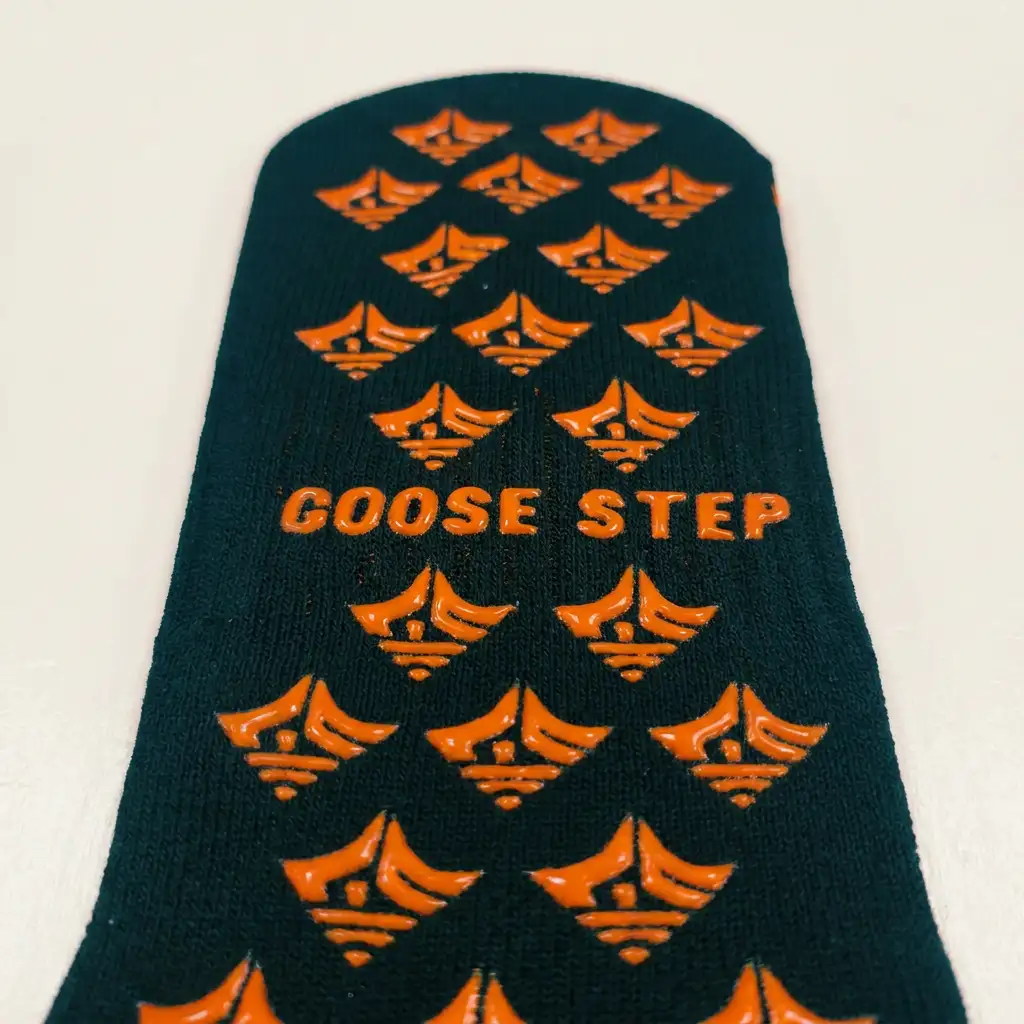
Real Custom Compression Socks
Here’s an example of custom compression socks we produced for a medical supply company. The graduated compression supports circulation:
Related Guides
- Custom Jacquard Socks Guide
- Custom Grip Socks Guide
- Custom Embroidered Socks Guide
- Custom Sock MOQ Guide
- Custom Sock Pricing Guide
What is the minimum order for custom compression socks?
Our factory minimum is 10 pairs per design/color/compression level — one of the lowest in the industry. This means a small medical practice, sports team, or individual can order custom compression socks. For hospitals and medical facilities, order quantities typically range from 500 to 10,000+ pairs. For corporate wellness programs, order quantities typically range from 100 to 2,000 pairs. You can order 10 pairs of one compression level/design and 10 pairs of another — each design/compression level counts separately for minimum purposes. The low MOQ also allows you to test different compression levels, sizes, and designs before committing to a large order. For more information on minimum orders and starting a sock brand, see our comprehensive startup sock brand guide.
Can we get a sample before placing a bulk order?
Yes — we strongly recommend it, especially for first-time compression sock orders. Samples are produced in 5-7 days (compression testing takes extra time) and shipped via express courier (3-5 days delivery to the US/EU). The sample fee ($50-$120 including shipping) is typically credited toward your bulk order. This ensures you are completely satisfied with the fit, comfort, compression level, logo quality, and materials before committing to a larger order. We recommend testing the sample for at least 3-5 days of all-day wear to evaluate comfort and durability. For medical facilities, have your medical director or vascular specialist evaluate the sample for appropriate compression level and fit. For sports teams, have a few athletes test the sample during training and competition. For corporate wellness programs, have a few employees test the sample during a work week. Only approve bulk production when you are 100% satisfied with the sample. As noted in “From Our Factory Floor,” 40% of compression sock buyers choose the wrong compression level — a sample would have caught this issue before the bulk order.
What compression level should we choose?
The right compression level depends on your specific needs. Here is a quick guide:
- 15-20 mmHg (Moderate): Best for everyday wear, corporate wellness, travel, mild swelling, and recreational sports. The safest, most comfortable choice for most people. No medical supervision required.
- 20-30 mmHg (Firm): Best for medical use, nurses/doctors standing long shifts, moderate swelling, varicose veins, post-surgical DVT prevention, competitive sports, and pregnancy (2nd/3rd trimester). Medical supervision recommended for medical conditions.
- 30-40 mmHg (Extra Firm): Best for severe swelling, lymphedema, chronic venous insufficiency, and post-thrombotic syndrome. REQUIRES medical supervision — must be prescribed by a doctor. Not for everyday wear or corporate wellness.
When in doubt, start with 15-20 mmHg and consult your doctor. For corporate wellness programs, 15-20 mmHg is the safest choice. For hospitals and medical facilities, consult your medical director — most use 20-30 mmHg for general post-surgical DVT prevention. As noted in “From Our Factory Floor,” 40% of compression sock buyers choose the wrong compression level — take the time to determine the right level for your needs, and consult a medical professional if you have any questions.
How do we size compression socks correctly?
Compression socks must be sized by ankle circumference and calf circumference (NOT shoe size) to provide the correct graduated compression. Here is how to measure: (1) Ankle circumference — measure around the fullest part of the ankle, just above the ankle bone. (2) Calf circumference — measure around the fullest part of the calf (usually at the widest point, about 1/3 of the way down from the knee). (3) Measure at the end of the day (when legs are most swollen) for the most accurate fit. (4) Have someone else measure you for best results. We offer sizes from XS to XXL, with size charts specifying ankle and calf circumference ranges for each size. For hospitals, have nursing staff measure patients’ ankles and calves before ordering. For sports teams, measure each athlete individually. For corporate wellness, provide size charts and measuring instructions to employees. If you are between sizes, it is generally better to size up for comfort. As noted in “From Our Factory Floor,” 35% of compression sock buyers order the wrong size — always measure and use a size chart, don’t guess based on shoe size. For more information on compression sock sizing, see our comprehensive sock size guide.
Are custom compression socks covered by insurance or FSA/HSA?
In many cases, yes — compression socks may be covered by health insurance, Flexible Spending Accounts (FSA), or Health Savings Accounts (HSA) when prescribed by a doctor for a medical condition. Here is what you need to know: (1) Health Insurance: Many health insurance plans cover medical-grade compression socks (20 mmHg and higher) when prescribed by a doctor for conditions like varicose veins, venous insufficiency, lymphedema, or post-surgical DVT prevention. Coverage varies by plan — some plans cover 100%, some cover a percentage, and some have a deductible. Patients should check with their insurance provider for specific coverage details. (2) FSA/HSA: Compression socks are typically eligible for FSA/HSA reimbursement when prescribed by a doctor for a medical condition. A Letter of Medical Necessity (LMN) from a doctor may be required. Patients should check with their FSA/HSA administrator for specific eligibility requirements. (3) Important Note: Compression socks for general wellness, sports performance, or travel (without a doctor’s prescription) are typically NOT covered by insurance or eligible for FSA/HSA reimbursement. Only socks prescribed for a specific medical condition are eligible. For hospitals and medical facilities, providing patients with information about insurance/FSA/HSA coverage can help reduce patient cost concerns and improve compliance. For corporate wellness programs, compression socks are typically purchased by the employer as a wellness perk and are not billed to insurance. As the case study above shows, a Chicago hospital provided custom compression socks to post-surgical patients as part of their DVT prevention protocol — the cost was absorbed by the hospital as part of patient care, and the 35% reduction in DVT rate more than justified the cost.
How long do compression socks last?
The lifespan of compression socks depends on the quality of the materials, how often they are worn, and how they are cared for. Here is a general guide: (1) High-quality synthetic blends (nylon/spandex): 50+ washes (approximately 6-12 months with regular wear). These socks maintain their compression (±5 mmHg) for at least 50 washes when cared for properly. (2) Merino wool blends: 30-40 washes (approximately 4-8 months with regular wear). Merino wool is softer and more comfortable but slightly less durable than synthetic blends. (3) Cheap, low-quality socks: 5-15 washes (approximately 1-3 months with regular wear). These socks lose compression quickly, pill, and develop holes after just a few wears. To extend the life of your compression socks: (1) Wash in cold water on a gentle cycle (or hand wash), (2) Use a mild detergent (no bleach or fabric softener — fabric softener can break down the elastic fibers), (3) Tumble dry on low heat or hang dry (high heat can damage elastic fibers), (4) Don’t iron, (5) Don’t dry clean, (6) Rotate between multiple pairs (this gives the elastic fibers time to recover between wears), and (7) Replace socks when they start to lose compression, become loose, or develop holes. As noted in “From Our Factory Floor,” 30% of compression sock buyers choose cheap socks that lose compression after a few washes — high-quality socks may cost $1-$2 more per pair, but they last 5-10 times longer, so the cost per wear is actually lower.
Can compression socks be worn during exercise and sports?
Yes — compression socks are popular among athletes for both performance enhancement and recovery. Here is what the research says: (1) Performance: Compression socks can improve venous return, reduce muscle vibration, and improve proprioception (body awareness), which may enhance performance during endurance sports like running, cycling, and triathlon. Some studies have shown small improvements in endurance and power output, though results are mixed. (2) Recovery: The most well-documented benefit of compression socks for athletes is faster recovery. Studies have shown that athletes wearing compression socks during recovery have 20-30% less muscle soreness (DOMS) 24-48 hours after exercise compared to athletes not wearing compression socks. Compression socks also reduce swelling and improve circulation, which speeds up the removal of metabolic waste products (like lactic acid) from the muscles. (3) Injury Prevention: Compression socks may reduce the risk of muscle strains and shin splints by providing support and reducing muscle vibration. (4) How to Use: For performance, wear compression socks during exercise (15-20 mmHg or 20-30 mmHg depending on preference). For recovery, wear compression socks after exercise for 2-4 hours (or overnight for more intense recovery). Some athletes wear compression socks during both exercise and recovery. (5) Important Note: Compression socks should not be worn during exercise if they cause discomfort, numbness, or restricted circulation. If you experience any of these, remove the socks immediately and consult your doctor. For sports teams, custom compression socks with the team logo and colors create a unified team look and provide performance and recovery benefits. For more information on sports-specific compression socks, see our sports team sock guide.
Do you offer other types of custom socks for medical and corporate use?
Yes — we produce a wide range of custom socks beyond compression socks, including custom grip socks (with non-slip grips on the sole — great for hospital patient slipper socks, yoga/pilates, and physical therapy), custom embroidered socks (with embroidered logos — great for premium corporate gifts and employee appreciation), custom jacquard socks (with woven logos — great for corporate branding and retail), crew socks, ankle socks, no-show socks, knee-high socks, and dress socks (for corporate events and employee uniforms). Many hospitals and corporate wellness programs offer a range of sock types — compression socks for medical/wellness use, grip socks for patient care/physical therapy, and branded crew socks for employee appreciation and corporate gifts. If you want to expand your sock product line, we can handle everything in one order with unified branding and consistent quality. For corporate gifts and employee appreciation, also see our corporate gift sock guide — custom socks make excellent corporate gifts and employee appreciation items.
Ready to Order Custom Compression Socks for Your Organization?
Whether you outfit a small medical practice of 10 healthcare workers or a large hospital system with 10,000+ patients, whether you manage a professional sports team or a corporate wellness program for 500 employees, our factory makes ordering custom compression socks simple, affordable, and risk-free. With 3-day samples, 10-pair minimums, competitive factory-direct pricing (50-70% less than medical supply distributors), unlimited design revisions, accurate compression testing (±5 mmHg), premium materials that last 50+ washes, precise sizing (XS to XXL based on ankle and calf measurements), and medical compliance certifications (FDA registered, CE marked, ISO 9001, OEKO-TEX), we help hospitals, sports teams, and corporate wellness programs create compression socks that are effective, comfortable, and compliant. As the case study above shows, a Chicago hospital reduced their DVT rate by 35% and saved $26,500 in the first year by switching to our custom compression socks — the ROI is clear, both financially and in patient outcomes.
We have produced custom compression socks for over 50 hospitals and medical facilities, 30+ sports teams and clubs, and 20+ corporate wellness programs across the US, UK, EU, and Australia — from small clinics to large hospital systems, from recreational running clubs to professional sports teams, from startup companies to Fortune 500 corporate wellness programs. No matter the size of your organization, you get the same factory-direct quality, responsive communication, accurate compression, and attention to detail. We also produce custom grip socks, custom embroidered socks, and custom jacquard socks — if you want to expand your sock product line beyond compression socks, we can handle everything in one order with unified branding and consistent quality. For corporate gifts and employee appreciation, also see our corporate gift sock guide.
Contact us on WhatsApp for a free design consultation and quote. Send us your organization logo, desired compression level, sock length, material preference, quantity, and any questions — we will respond within 24 hours with a digital design mockup, detailed pricing, and compression level recommendations. Whether you need 10 pairs or 10,000 pairs, we are here to help you get the perfect custom compression socks for your organization.