
Grip Socks: PVC vs Silicone
Which anti-slip material is right for your grip socks? A complete 2026 comparison covering grip strength, durability, comfort, cost, and best use cases for yoga, hospitals, and sports.
Quick Answer
Choose PVC (TPE) if: You need the best value, medium grip performance, and are ordering in volume. It’s the industry standard for most grip sock applications.
Choose Silicone if: You need premium grip performance, softer feel, and are targeting high-end studios or medical-grade applications. It costs 20-30% more.
Most popular choice: PVC dots — 90% of our grip sock orders use PVC because it balances performance and cost perfectly.
Side-by-Side Comparison
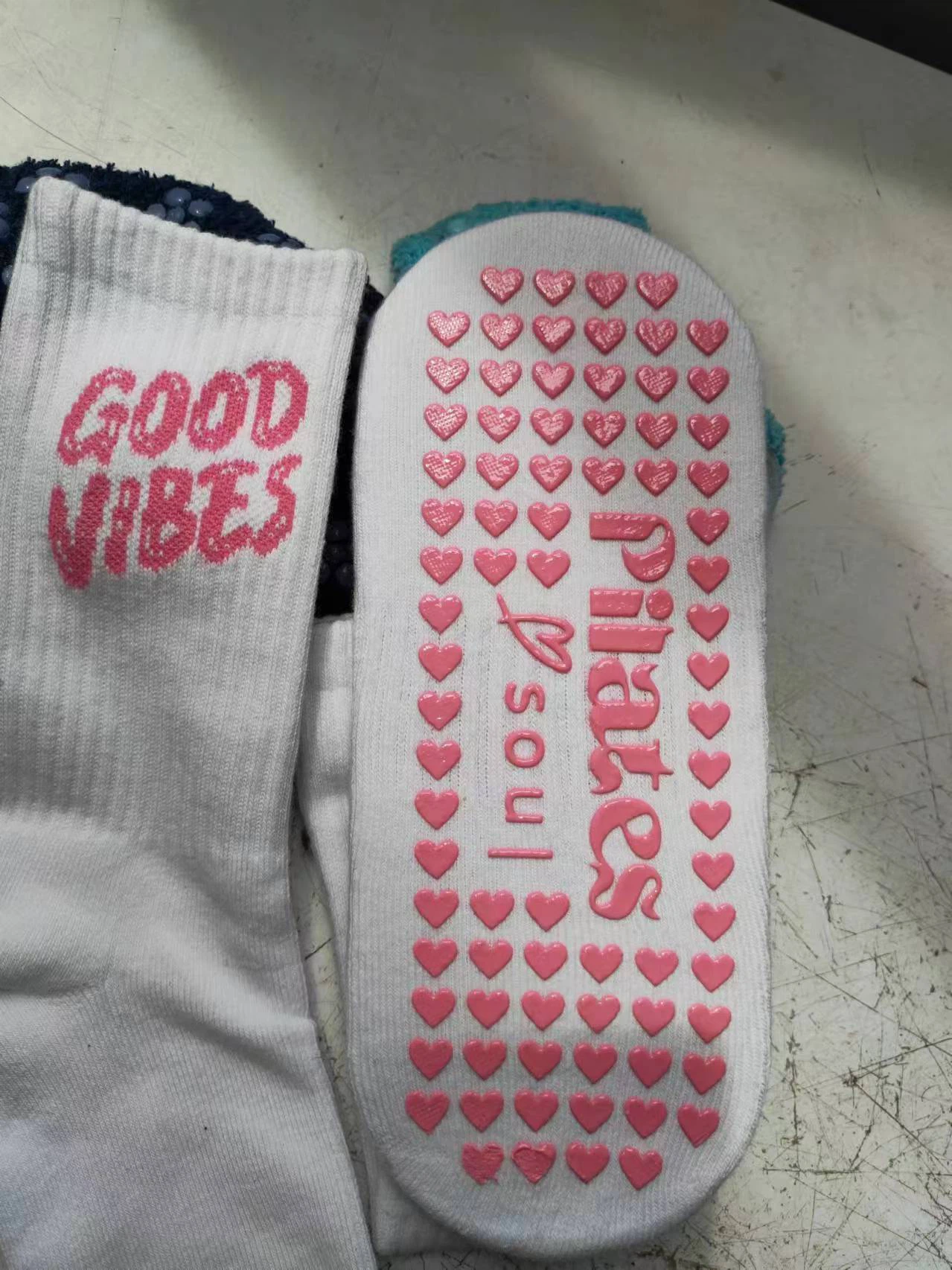
PVC dot pattern on a non-slip grip sock — the industry standard choice
What Is PVC (TPE) Grip?
PVC (polyvinyl chloride), often blended as TPE (thermoplastic elastomer), is printed onto the sole of the sock as a liquid and heat-cured into raised dots. It hardens into a firm, durable grip that bonds strongly to the fabric. It is the most common anti-slip material in grip socks because it is inexpensive, long-lasting, and easy to print in high volume.
PVC dots are slightly firm underfoot and can be printed in almost any pattern — circles, hearts, stripes, or brand shapes. They resist cracking and remain bonded through 100+ washes.
What Is Silicone Grip?
Silicone is a softer, more flexible polymer that stays pliable after curing. It provides the highest coefficient of friction — the strongest grip — and feels softer and more comfortable against the skin. It is also more eco-friendly and is the standard choice for medical-grade and premium applications.
The trade-off is cost (20-30% more) and slightly lower long-term wash resistance than PVC. Silicone can begin to degrade or lose tack after roughly 50-80 washes, depending on laundering.
Which Should You Choose by Use Case?
- Yoga & pilates studios — Both work. PVC for value and durability; silicone for a premium, softer feel that studios can charge more for.
- Hospitals & healthcare — Silicone preferred for medical-grade softness and eco profile; PVC acceptable where budget dominates.
- Trampoline parks — PVC. High volume, heavy wear, and maximum wash durability make it the clear choice.
- Hotels & spas — Silicone for the premium guest experience; PVC for large chains managing cost.
- Sports & athletic — PVC for durable, high-friction grip; silicone for high-end performance socks.
- Retail resale — Offer both: silicone as the premium tier, PVC as the standard best-seller.
Caring for Grip Dots
- Wash inside out in cool or warm water, not hot.
- Avoid fabric softeners and bleach — they coat the dots and reduce tack.
- Tumble dry low or line dry; high heat accelerates wear, especially on silicone.
- Do not iron the grip surface.
Frequently Asked Questions
Which grip is more durable?
PVC. It resists cracking and stays bonded through 100+ washes, while silicone typically lasts 50-80 washes before losing some tack.
Which has the strongest grip?
Silicone has the highest friction and the softest feel, which is why premium studios and medical use favor it. PVC offers good, reliable grip at a lower cost.
Can grip dots be printed in custom shapes?
Yes. Both materials can be printed in circles, hearts, stripes, logos, or brand shapes across the sole.
Is silicone worth the extra cost?
For premium studios, medical use, and high-end retail, yes — the softer feel and stronger grip justify a higher price. For high-volume and heavy-wear settings, PVC is the better value.
Can I order samples of both?
Yes. We produce samples within 3 days so you can compare the feel and grip of both materials before committing to a bulk order.
Related Grip Sock Guides
- Complete Grip Socks Guide
- Grip Socks for Yoga & Pilates
- Grip Socks for Trampoline Parks
- Custom Sock Pricing Guide
- Custom Sock MOQ Guide