
Custom Compression Socks
Factory-direct custom compression socks with gradient pressure technology. Medical-grade certification, private label available, MOQ from 50 pairs. Perfect for healthcare brands, sports retailers, and medical supply companies.
Gradient Compression Technology Explained
Compression socks are not tight socks — they use scientifically calibrated gradient pressure that is strongest at the ankle and gradually decreases up the leg. This pressure gradient helps veins push blood back to the heart, improving circulation and reducing swelling.
Ankle (Strongest Pressure)
The highest pressure (100% of rated mmHg) is applied at the ankle. This is where blood pools most due to gravity. The firm compression squeezes veins, helping blood flow upward against gravity.
Calf (Gradually Decreasing)
Pressure decreases to 70-80% at the calf. As blood travels upward, less pressure is needed. The calf muscle pump (activated when walking) works with compression to push blood toward the heart.
Below Knee (Lightest Pressure)
Pressure drops to 40-50% just below the knee. This gentle pressure maintains venous return without restricting circulation at the knee joint. The gradient ensures blood flows efficiently in one direction — upward.
🔬 Why Gradient Pressure Matters
Non-gradient (uniform) compression can actually worsen circulation by creating a tourniquet effect — tight pressure at the top of the sock can restrict blood flow. True medical compression socks must have a calibrated gradient: 100% at ankle, 70-80% at calf, 40-50% below knee. All HZensheng compression socks are manufactured with precise gradient pressure verified by pressure testing equipment (MST MK III / Salzmann).
Compression Levels: Which One Is Right?
Compression socks are classified by pressure level measured in millimeters of mercury (mmHg). Choosing the correct level is critical — too little provides no benefit, too much can be dangerous for certain patients.
Mild Compression
Over-the-counter level. Safe for most healthy adults. Provides gentle support for everyday wear, travel, and mild fatigue.
Moderate Compression
The most commonly prescribed medical grade. Requires consultation for patients with circulatory conditions. Effective for moderate symptoms.
Firm / Medical Compression
Prescription-level compression. Should only be worn under medical supervision. Not for self-prescription. Used for serious circulatory conditions.
| Compression Level | Classification | Availability | Supervision Required | Typical Use Cases |
|---|---|---|---|---|
| 10-15 mmHg | Ultra-mild | OTC / Retail | No | Preventive wear, travel, mild fatigue |
| 15-20 mmHg | Mild | OTC / Retail | No (healthy adults) | Everyday, standing jobs, pregnancy I-II, athlete recovery |
| 20-30 mmHg | Moderate / Class I | Medical (Rx recommended) | Consultation advised | Varicose veins, edema, post-surgery, DVT prevention, pregnancy III |
| 30-40 mmHg | Firm / Class II | Prescription | Doctor required | Severe venous disease, lymphedema, venous ulcers, post-thrombotic syndrome |
| 40-50 mmHg | Extra-firm / Class III | Prescription only | Doctor required | Severe lymphedema, advanced venous disease (special order) |
⚠️ Important Safety Note for Buyers
If you are reselling compression socks, clearly label the compression level and include guidance: 15-20 mmHg is safe for OTC sale; 20-30 mmHg should include a recommendation to consult a healthcare provider; 30-40 mmHg and above should be sold as prescription/medical devices with appropriate labeling. Mislabeling compression levels can lead to serious patient harm and regulatory liability. HZensheng provides accurate pressure testing reports (MST MK III) for every compression level.
Target Markets & Use Cases
Compression socks serve a wide range of customers — from medical patients to athletes to frequent travelers. Understanding these segments helps you position your product line effectively.
Medical Patients
Conditions: Varicose veins, edema, lymphedema, chronic venous insufficiency, post-surgery recovery, DVT history. Level: 20-40 mmHg (doctor-prescribed). Market size: $3.5B+ global medical compression market, growing 6% annually. Key buyers: Medical supply stores, pharmacies, clinics, durable medical equipment (DME) providers.
Travelers & Frequent Flyers
Need: Prevent DVT (economy class syndrome), reduce leg swelling on long flights. Level: 15-20 mmHg. Market: 4.5 billion airline passengers annually, 10-15% at risk for DVT. Key buyers: Travel stores, airport retailers, online travel brands, corporate travel departments. Hook: "Travel compression socks" branding, travel-friendly packaging.
Healthcare Workers
Need: 12+ hour shifts on feet, leg fatigue, swelling, varicose vein prevention. Level: 15-20 mmHg (most common). Market: 20M+ nurses in US/EU alone, high repeat purchase rate. Key buyers: Hospital gift shops, uniform stores, nursing associations, healthcare e-commerce. Hook: Fun patterns + medical functionality, "nurse compression socks" search volume 100K+/month.
Athletes & Runners
Need: Improved circulation during exercise, faster recovery, reduced muscle soreness, shin splint prevention. Level: 15-25 mmHg. Market: 60M+ runners in US/EU, growing athleisure market. Key buyers: Running stores, sports retailers, athletic brands, triathlon shops. Hook: Performance branding, moisture-wicking fabric, bright colors, "compression socks for running."
Pregnant Women
Need: Reduce leg swelling (edema), prevent varicose veins, improve circulation during pregnancy. Level: 15-20 mmHg (first/second trimester), 20-30 mmHg (third trimester, doctor-supervised). Market: 3.6M births/year US + EU, maternity apparel market $20B+. Key buyers: Maternity stores, baby boutiques, obstetrician offices, pregnancy e-commerce. Hook: Maternity-specific sizing, soft fabrics, "pregnancy compression socks."
Standing Professionals
Need: Teachers, retail workers, chefs, factory workers, hairdressers, construction — anyone standing 8+ hours daily. Level: 15-20 mmHg. Market: 30%+ of workforce stands for majority of shift. Key buyers: Uniform suppliers, occupational health, corporate wellness programs, workwear brands. Hook: Occupational health positioning, "compression socks for standing all day," B2B corporate wellness sales.
Medical-Grade Materials & Construction
Compression socks require specific material blends and construction techniques to maintain accurate pressure over time. Here is what goes into a quality medical compression sock.
🧪 Standard Material Blends
| Blend | Composition | Best For | Durability |
|---|---|---|---|
| Standard Medical | 70% Nylon / 30% Spandex | General medical use, 20-30 mmHg | 6-12 months daily wear |
| Premium Soft | 65% Nylon / 25% Spandex / 10% Cotton | Sensitive skin, all-day comfort | 6-9 months |
| Athletic Performance | 75% Nylon / 20% Spandex / 5% Polyester | Sports, running, moisture-wicking | 9-12 months |
| Antibacterial Silver | 68% Nylon / 28% Spandex / 4% Silver ion fiber | Medical, odor control, long shifts | 6-12 months |
| Bamboo Soft | 60% Bamboo rayon / 25% Nylon / 15% Spandex | Eco-friendly, ultra-soft, sensitive skin | 4-6 months |
| Merino Wool Blend | 50% Merino / 30% Nylon / 20% Spandex | Cold weather, outdoor, temperature regulation | 6-9 months |
* Spandex (elastane) content determines compression power. 25-30% spandex is standard for medical-grade 20-30 mmHg. Lower spandex content = lower compression.
🏗️ Key Construction Features
Precision Gradient Knitting
Computerized knitting machines with 200-400 needles create precise pressure gradients. Each zone (ankle/calf/knee) uses different stitch density and tension to achieve target mmHg. Verified by MST MK III pressure testing.
Reinforced Heel & Toe
Double-layered heel and toe pockets with extra nylon for durability. These are the highest-wear areas — reinforcement prevents holes and extends sock life. Y-heel construction ensures proper fit and prevents slippage.
Wide Comfort Top Band
2-3 inch wide top band with silicone-free elastic that stays in place without digging into the leg. Critical for compression socks — a tight top band can create a tourniquet effect. The band must be comfortable for 8-12 hour wear.
Seamless Toe Closure
Hand-linked or seamless toe eliminates pressure points and blisters. Essential for diabetic patients and those with sensitive feet. The toe area must be smooth and non-irritating for all-day medical wear.
Breathable Mesh Panels
Strategic mesh knit zones on the calf and top of foot allow air circulation, reducing heat and moisture buildup. Important for compression socks since the tight fit can trap heat. Mesh panels improve comfort for all-day wear.
Compression Sock Sizing: Measure for Correct Fit
Compression socks must fit correctly to work properly. Unlike regular socks (sized by shoe size), compression socks are sized by ankle and calf circumference. A sock that is too loose provides no compression; too tight can be dangerous.
📏 How to Measure (3 Measurements)
📐 Standard Size Chart (Knee-High)
| Size | Ankle (in) | Calf (in) | Leg Length (in) | Shoe Size (US) |
|---|---|---|---|---|
| XS | 7-8 | 10-13 | 14-16 | W 4-6 |
| S | 8-9 | 12-15 | 15-17 | W 6-8 / M 5-7 |
| M | 9-10.5 | 14-17 | 16-18 | W 8-10 / M 7-9 |
| L | 10.5-12 | 16-19 | 17-19 | W 10-12 / M 9-11 |
| XL | 12-13.5 | 18-21 | 18-20 | M 11-13 |
| XXL | 13.5-15 | 20-24 | 19-21 | M 13-15 |
| Wide Calf | 9-12 | 18-26 | 16-19 | W 8-12 / M 7-11 |
* Always provide a sizing chart with measurements, not just shoe sizes. 30% of customers need wide-calf or custom sizing. HZensheng offers custom size charts for your brand.
💡 Buyer Tip: Include a Measuring Guide with Every Order
70% of compression sock returns are due to incorrect sizing. Include a printed measuring guide in every package, and put a clear sizing chart on your product page. For online retailers, offer a "size finder" quiz or interactive sizing tool. HZensheng can provide custom-sized socks for bariatric patients, wide-calf customers, and petite sizes — expanding your market reach and reducing returns.
Customization & Private Label Options
Build your compression sock brand with full customization — from colors and patterns to private label packaging. HZensheng offers complete OEM/ODM services for compression sock brands.
Colors & Patterns
Choose from 20+ standard colors or custom Pantone dyeing (500 pair MOQ). Full jacquard patterns, stripes, dots, geometric designs. Medical skin tones (beige, black, white) + fashion colors for retail. Pattern design service available.
Logo & Branding
Jacquard knit logo on cuff (included, up to 6 colors). Woven label with your brand name/size. Printed size label inside sock. Custom hang tags. Your brand, your identity — no factory markings visible.
Private Label Packaging
Custom retail boxes with your branding (500 pair MOQ). Custom polybags with printed logo. Insert cards with sizing instructions and care guide. Barcode labeling (UPC/EAN). Ready for retail shelves or Amazon FBA.
Certification & Testing
MST MK III pressure testing reports per batch. FDA facility registration. CE marking for EU market. ISO 9001 quality system. OEKO-TEX Standard 100 textile safety. Biocompatibility testing for medical-grade products. Documentation provided for regulatory compliance.
Custom Sizing
Standard sizes XS-XXL + wide calf. Custom size ranges for bariatric (up to 30" calf), petite, and pediatric. Custom length options (knee-high, thigh-high, waist-high). Maternity-specific sizing with adjustable top band.
Specialty Features
Silver ion antibacterial treatment. Copper-infused fibers. Cooling gel technology. Reflective strips for night safety. Open-toe design (for medical inspection). Zippered compression (for easy donning). Silicone grip top band (thigh-high).
Pricing, MOQ & Production Timeline
Transparent factory-direct pricing for custom compression socks. All prices DDP (Delivered Duty Paid) to US/UK/EU — no hidden shipping or customs costs.
| Quantity | 15-20 mmHg (Standard) | 20-30 mmHg (Medical) | 30-40 mmHg (Firm) | Custom Logo | Private Label Box |
|---|---|---|---|---|---|
| 50 - 99 pairs | $4.50 - $5.50 | $5.00 - $6.00 | $5.50 - $7.00 | +$0.30/pair | N/A |
| 100 - 249 pairs | $3.50 - $4.50 | $4.00 - $5.00 | $4.50 - $5.50 | +$0.20/pair | +$0.80/pair |
| 250 - 499 pairs | $2.80 - $3.50 | $3.20 - $4.00 | $3.80 - $4.80 | Included | +$0.60/pair |
| 500 - 999 pairs | $2.20 - $2.80 | $2.60 - $3.20 | $3.00 - $3.80 | Included | +$0.50/pair |
| 1,000 - 2,999 pairs | $1.80 - $2.30 | $2.10 - $2.70 | $2.50 - $3.20 | Included | +$0.40/pair |
| 3,000+ pairs | $1.50 - $1.90 | $1.80 - $2.30 | $2.20 - $2.80 | Included | +$0.30/pair |
MOQ: 50 Pairs
Minimum order 50 pairs per design/compression level. Size mixing free within MOQ. Lower MOQ available for sample orders and first-time buyers. Custom colors: 500 pair MOQ. Custom packaging: 500 pair MOQ.
Production: 15-20 Days
Standard production 15-20 days (compression knitting requires precision). Sample: 5-7 days. DDP air shipping: 5-7 days. Total: 35-45 days from order to delivery. Rush service available (20-28 days, +20-30%).
Payment Terms
30-50% deposit to start production, balance before shipping. Sample fee $30-50 (deducted from bulk order). PayPal, T/T bank transfer, Western Union. Credit card payment available for orders under $1,000.
Care & Washing Instructions
Proper care extends the life of compression socks and maintains their compression power. Include these instructions with every order to improve customer satisfaction and reduce returns.
✅ DO
- Wash in cold or lukewarm water (max 30°C / 86°F)
- Use mild detergent (no bleach, no fabric softener)
- Hand wash or machine wash on gentle cycle in a mesh laundry bag
- Rinse thoroughly to remove all detergent residue
- Air dry flat or hang — avoid direct sunlight and heat sources
- Replace every 3-6 months with daily wear (elastic degrades over time)
- Have 2-3 pairs to rotate — extends life of each pair
- Inspect for snags, holes, or stretched elastic before each wear
❌ DON'T
- Don't use bleach — destroys spandex fibers, reduces compression
- Don't use fabric softener or dryer sheets — coats fibers, reduces elasticity
- Don't tumble dry — heat destroys spandex, compression drops 30-50%
- Don't iron — melts synthetic fibers, creates weak spots
- Don't dry clean — chemicals degrade elastic and compression
- Don't wring or twist — stretches fibers out of shape
- Don't wear with holes or runs — compression is compromised, can cause injury
- Don't share compression socks — hygiene + incorrect fit for other person
📊 Compression Degradation Over Time
With daily wear and proper care, compression socks maintain 90%+ of rated pressure for 3 months, 80%+ for 6 months. After 6 months, compression may drop below therapeutic levels. Recommend customers replace every 3-6 months with daily wear. This creates a natural repeat purchase cycle for your brand — subscription models work well for compression socks (e.g., "subscribe and save 15%, deliver every 3 months").
Frequently Asked Questions
Ready to Launch Your Compression Sock Line?
HZensheng provides full OEM/ODM compression sock manufacturing — from design and prototyping to private label packaging and DDP delivery. FDA-registered facility, MST MK III pressure testing, MOQ from 50 pairs. Free design mockup and sample available.
Get a Free Compression Sock Quote WhatsApp for SamplesContinue Learning About Compression Socks
Compression Socks: Medical-Grade Gradient Compression Technology
Compression socks apply controlled, graduated pressure to the lower leg, tightest at the ankle and gradually decreasing upward, to improve blood circulation, reduce swelling, and support venous health. Once worn primarily by medical patients, compression socks have entered the mainstream through athletes (recovery and performance), travelers (DVT prevention), and professionals who stand all day (nurses, teachers, retail workers). The global compression sock market exceeds $3 billion and grows 6% annually, with athletic compression being the fastest-growing segment. For custom sock brands, compression socks command 2-3x the price of regular socks and have exceptionally high customer loyalty, once someone finds a compression sock that fits and works, they rarely switch brands.
Medical and Clinical
The original and largest segment. Used for varicose veins, deep vein thrombosis (DVT) prevention, post-surgery recovery, lymphedema management, and diabetic foot care. Medical compression requires precise pressure grading and often a physician prescription. Key buyers: pharmacies, medical supply stores, hospitals, clinics.
Athletic and Performance
The fastest-growing segment. Athletes wear compression for improved oxygen delivery, reduced muscle oscillation, faster recovery, and injury prevention. Used by runners, cyclists, triathletes, basketball players, and CrossFit athletes. Athletic compression focuses on performance and recovery rather than medical treatment.
Travel and Lifestyle
Mainstream adoption segment. Travelers wear compression on long flights to prevent DVT and reduce leg swelling. Professionals who stand all day (nurses, teachers, chefs, retail workers) wear compression to reduce fatigue and swelling. This segment values style and comfort as much as compression.
Understanding Compression Levels
| Pressure Level | mmHg | Classification | Best For | Prescription Needed? |
|---|---|---|---|---|
| Mild | 8-15 mmHg | OTC / Wellness | Everyday wear, mild fatigue, travel, standing all day | No |
| Moderate | 15-20 mmHg | OTC / Medical | Mild varicose veins, pregnancy, prolonged sitting/standing, athletic recovery | No (consult doctor if medical condition) |
| Firm | 20-30 mmHg | Medical Grade | Moderate varicose veins, post-surgery, DVT history, edema management | Recommended (medical supervision advised) |
| Extra Firm | 30-40 mmHg | Medical Grade (Class II) | Severe varicose veins, lymphedema, post-thrombotic syndrome | Yes (physician prescription required) |
| Maximum | 40-50+ mmHg | Medical Grade (Class III) | Severe lymphedema, chronic venous insufficiency | Yes (specialist prescription required) |
How Gradient Compression Works
The Gradient Principle
True compression socks use gradient compression: pressure is highest at the ankle (100% of rated pressure) and decreases progressively up the leg, typically 70-80% at the calf, 50-60% at the knee. This gradient mimics the body natural muscle pump mechanism, helping push blood upward against gravity toward the heart. Without proper grading, a sock that is uniformly tight can actually impede circulation rather than improve it. Quality control requires pressure testing at multiple points (ankle, mid-calf, knee) to verify the gradient.
Manufacturing Technology
Compression socks are manufactured on specialized circular knitting machines with precision tension control. Key technologies: (1) Variable stitch density, more stitches per inch at the ankle, fewer upward, creating the pressure gradient. (2) Spandex/Lycra content, 15-25% spandex for medical grade, 10-15% for athletic. Higher spandex equals stronger, more durable compression. (3) Reinforced heel/toe, prevents pressure points and wear. (4) Seamless toe, critical for diabetic and medical use to prevent pressure ulcers. (5) Moisture-wicking yarns, nylon/polyester blends for comfort during all-day wear.
Sizing is Critical
Compression sock sizing is based on ankle and calf circumference, NOT shoe size, this is the most common mistake consumers make. A properly sized compression sock should: feel snug but not painful, leave no indentation marks after removal, and maintain consistent pressure throughout the day. Too tight equals pain, numbness, restricted circulation. Too loose equals no therapeutic benefit. Custom brands must provide detailed sizing charts with ankle/calf measurements and offer multiple sizes (S/M/L/XL, plus wide-calf options). Wide-calf compression is a fast-growing niche, 30% of women and 15% of men need wide-calf sizes.
Compression Decay and Replacement
Compression socks lose pressure over time due to spandex fatigue. Typical compression retention: 85-90% after 3 months, 70-75% after 6 months, 50-60% after 12 months. For medical use, manufacturers recommend replacing every 3-6 months. For athletic/everyday use, 6-12 months. This creates a subscription/replenishment business model, compression customers are repeat buyers. Custom brands should offer subscription discounts (10-15% off auto-ship) to lock in recurring revenue. The average compression customer buys 4-6 pairs per year.
Compression Sock Applications
Nurses and Healthcare Workers
The single largest professional segment for compression socks. Nurses work 12-hour shifts on their feet, leading to leg fatigue, swelling, and varicose veins. 60-70% of nurses wear compression socks regularly. Requirements: 15-20 mmHg (most common), comfortable for 12-hour wear, moisture-wicking, stylish designs (nurses want compression that does not look medical), and easy to put on. Customization: hospital/facility logo, fun patterns (hearts, flowers, animals), matching scrubs colors. This is a high-volume, high-repeat segment, nurses buy 4-8 pairs per year. MOQ typically 500-1,000 pairs.
Runners and Endurance Athletes
Athletic compression is the fastest-growing segment. Runners wear compression for: improved oxygen delivery to muscles, reduced muscle vibration (which causes fatigue and soreness), faster recovery post-run, and injury prevention (shin splints, calf strains). Requirements: 15-20 mmHg (performance), moisture-wicking synthetic blend, reflective details for night running, lightweight and breathable, seamless toe. Customization: running club/team logo, race event branding, custom colors. Marathon and half-marathon events are a major B2B opportunity, event organizers purchase custom compression socks as participant swag. MOQ typically 1,000-2,000 pairs for events.
Travelers and Frequent Flyers
Long-haul flights increase DVT risk by 2-3x due to prolonged sitting and dehydration. Compression socks (15-20 mmHg) reduce DVT risk by 50-60% on flights over 4 hours, according to Cochrane Review meta-analysis. Requirements: 15-20 mmHg, comfortable for 8-12 hour wear, easy to put on/take off in airplane bathrooms, stylish enough to wear with travel clothing. Customization: travel brand logo, airline co-branding, travel-themed designs. Airlines and travel companies are B2B buyers, premium airlines distribute compression socks in business/first class amenity kits. MOQ typically 2,000-5,000 pairs for airline kits.
Pregnancy and Maternity
During pregnancy, increased blood volume and uterine pressure on pelvic veins cause leg swelling and varicose veins in 50-70% of pregnant women. Compression socks (15-20 mmHg) reduce swelling and discomfort. Requirements: 15-20 mmHg, soft and comfortable, easy to put on (challenging during late pregnancy), stylish designs, wide-calf options (calves expand during pregnancy). Customization: maternity brand logo, feminine patterns, gift packaging. Maternity boutiques and baby stores are key retailers. This is a high-emotion purchase, pregnant women are willing to pay premium for comfort and safety. MOQ typically 500-1,000 pairs.
Business Opportunity: Compression Subscription Model
Compression socks have the highest repeat purchase rate of any sock category, customers need to replace every 3-6 months for medical use, 6-12 months for everyday. This creates a natural subscription opportunity. Successful compression brands (Comrad, Vim and Vigr, Dr. Motion) offer subscribe-and-save models with 10-20% discounts, achieving 30-40% subscription rates and 60-70% customer retention. For custom B2B clients (hospitals, clinics, corporate wellness), annual contracts with quarterly replenishment ensure predictable recurring revenue. If you are building a custom compression sock brand, prioritize the subscription model, it transforms a one-time purchase into a lifetime customer relationship.
Get a Free Quote for Custom Compression Socks
Fill in your requirements below and we will reply within 12 hours via WhatsApp. 3-day samples, MOQ only 10 pairs.
Learn More About Custom Socks
Sock Knit Density Guide →Sock Size Guide →How Much Do Custom Socks Cost →📚 Related Guides & Resources
Crew vs Ankle vs Quarter vs No-Show — find the perfect length for your sport and style.
Cotton vs Merino vs Bamboo vs Polyester — compare comfort, durability & moisture-wicking.
How much do custom socks cost? Complete pricing breakdown, hidden costs & money-saving tips.
Complete guide for teams: design, pricing, sizing, production timeline, and fundraising tips.
Step-by-step guide: niche research, design, manufacturing, pricing, and marketing from $1,500.
Spirit wear, fundraising, graduation gifts, and team socks for schools and universities.
🏭 Direct From Our Factory — No Middlemen
15+ years of custom sock manufacturing. 10,000+ pairs daily capacity. Ships to 50+ countries worldwide.

50+ computerized knitting machines running 24/7 for fast turnaround and consistent quality.

HANSHIN computerized jacquard machines produce intricate designs with precise color matching.

We source premium polyester, cotton, merino wool, and bamboo yarns from trusted suppliers.

In-house designers create your custom sock mockups within 24-48 hours, free revisions.
Years Experience
Pairs/Day Capacity
Countries Served
Defect Rate
Sample Turnaround
Minimum Order

OEKO-TEX Standard 100 • amfori BSCI Audited • ISO 14001 Environmental Management • Organic Content Standard (OCS) • Global Recycled Standard (GRS) • ITS Social Audit Score: 94/100
Trusted by 500+ Brands Worldwide
From startup sock brands to corporate teams and sports clubs, businesses worldwide trust HZensheng for quality custom socks with fast turnaround.
Happy Clients
Countries Served
Client Satisfaction
Average Rating
"We launched our sock brand with zero manufacturing experience. HZensheng guided us through every step — from yarn selection to packaging design. Samples arrived in 3 days, and the bulk order quality exceeded our expectations. We've reordered 4 times this year."
John Miller
Founder, Sock Brand (USA)
"Our Pilates studio needed custom grip socks with our logo. The PVC grip quality is excellent — no slipping even during intense reformer sessions. MOQ of 10 pairs let us test the market before committing to a large order. Communication via WhatsApp was always fast and professional."
Sarah Kim
Owner, Pilates Studio (UK)
"We ordered 2,000 pairs of custom crew socks for our company merch store. The 200N high-density knitting feels premium — clients constantly ask where we got them. DDP shipping to Germany was seamless, no customs hassle. The OEKO-TEX certification gave us confidence in material safety."
Michael Rodriguez
Marketing Director, Tech Co (Germany)
"Our running club needed custom quarter socks for race day. The jacquard logo came out crisp and clear, even with our complex team emblem. Delivery was faster than quoted, and every pair passed inspection. We've since ordered for 3 other local clubs — they all loved the quality."
David Thompson
Coach, Running Club (Canada)
"As a real estate agency, we give custom socks as closing gifts — clients love the personal touch. The bamboo cotton blend is incredibly soft, and our logo is woven in perfectly. HZensheng's design team helped us create 3 different designs for different property tiers. Repeat orders are now a quarterly routine."
Lisa Wang
Principal, Real Estate (Australia)
"We ordered custom dress socks for our wedding party — groomsmen and bridesmaids. The quality is far better than what we found from other suppliers, and the price was 40% lower. Our designer mockup was ready in 24 hours, and revisions were free. All 24 pairs arrived individually packaged with thank-you cards. Perfect!"
Pierre Bernard
Groom, Wedding (France)
Custom Compression Socks - Real Product Photos
See the quality and graduated compression of our medical-grade sock production
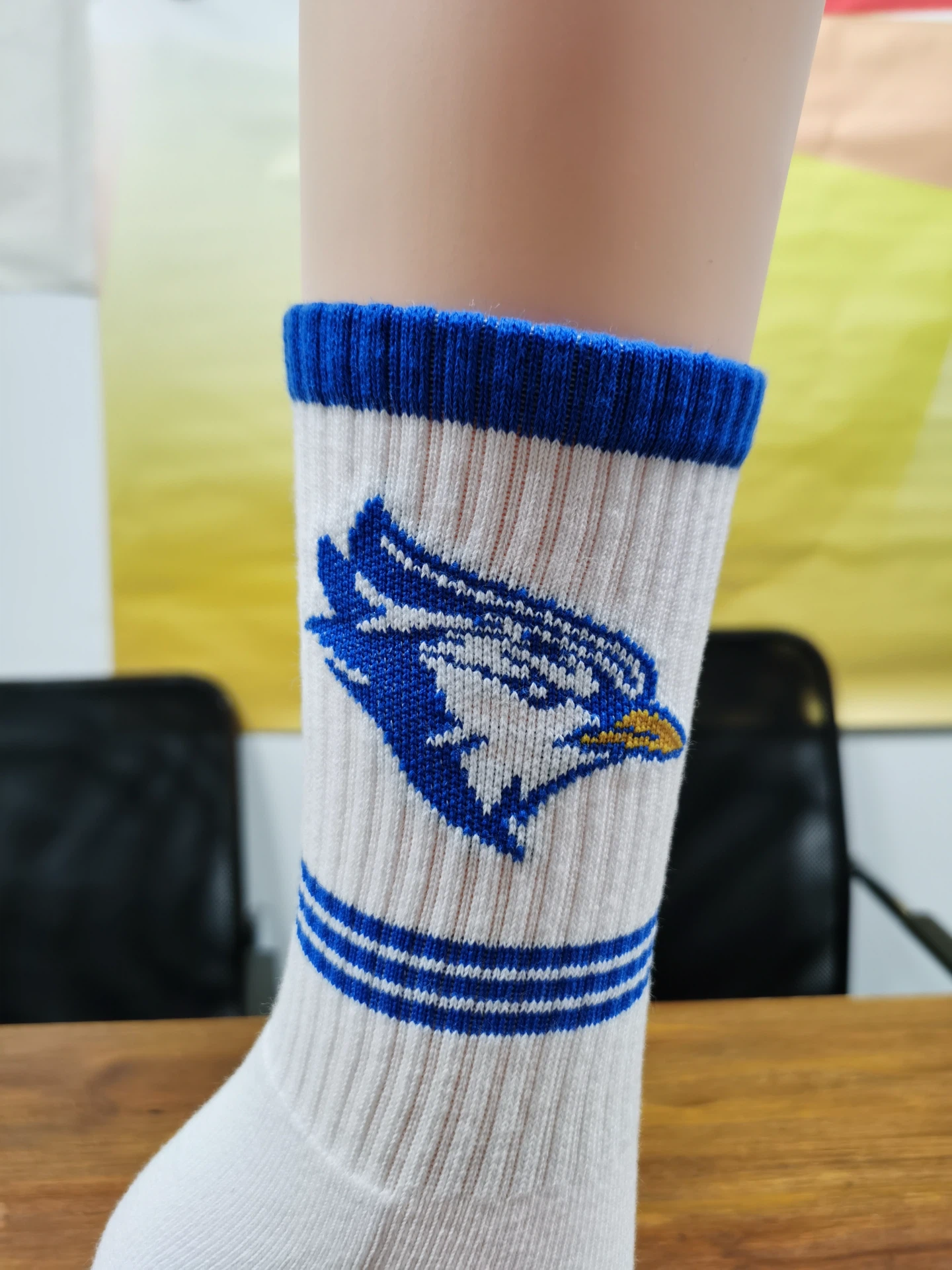
Compression crew socks with custom team logo jacquard. Graduated compression 15-20mmHg for athletic recovery and travel.
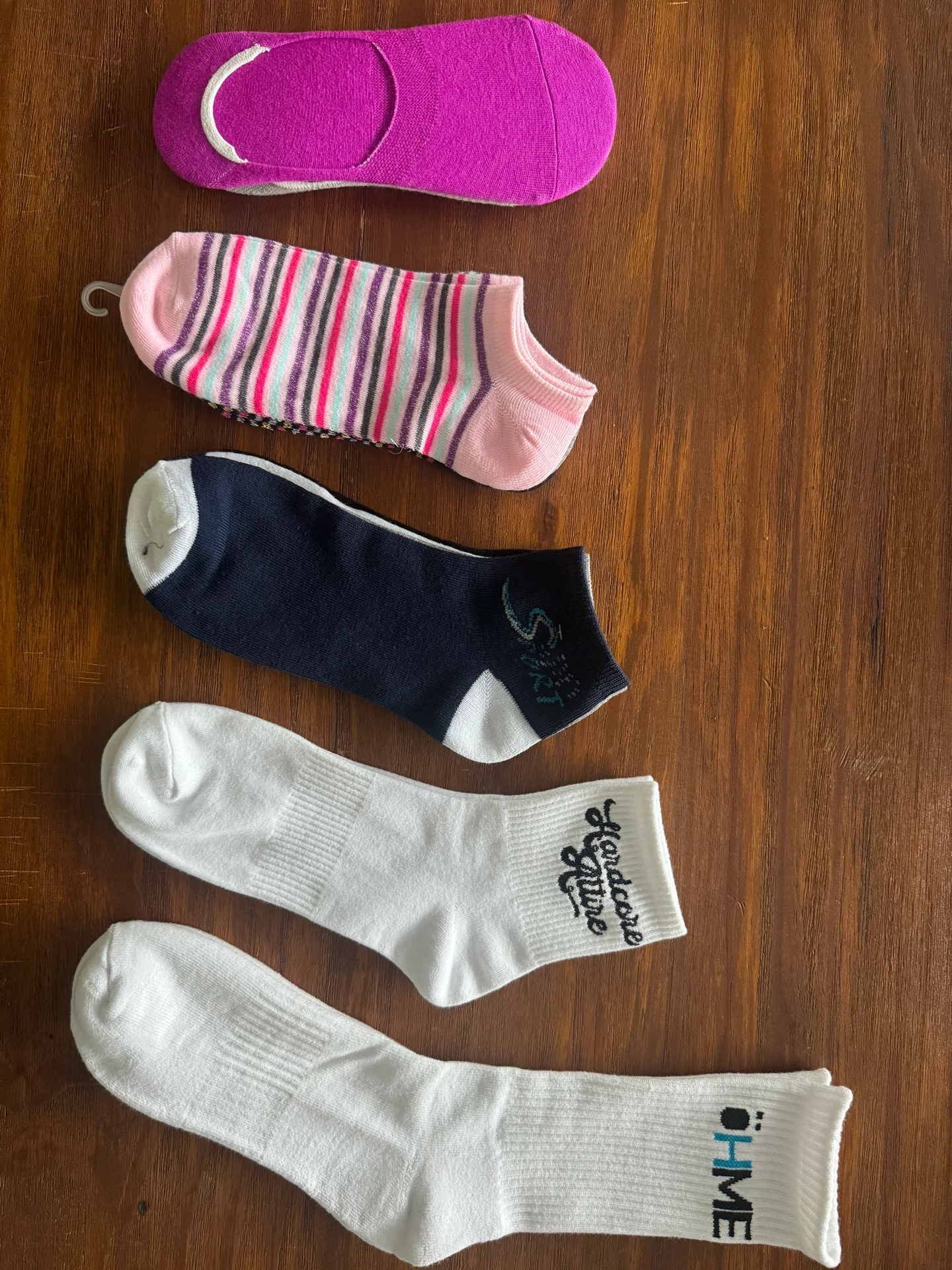
Compression socks available in multiple colors and patterns. Medical-grade nylon/spandex blend with precise gradient pressure.